Contrast
Text

Blog

  • Summer Refresh: Braille, Growth, and New Beginnings for an Educational Assistant

    Summer Refresh: Braille, Growth, and New Beginnings for an Educational Assistant

    The school year has wrapped up, and what a journey it’s been! While the 2.5-month education support worker strike certainly added a unique challenge, this past year has been one of significant growth and new experiences for me as an educational assistant specializing in visual impairments.

    Embracing Braille: Sharpening Skills for Enhanced Support

    As an educational assistant working with visually impaired students, proficiency in assistive technology and braille is paramount. This year highlighted a crucial need for me to refresh my skills in the Unified English Braille (UEB) code, encompassing both literary and math braille. It’s incredible how much has evolved since I initially learned Grade 2 English Braille and Nemeth Math Braille!

    This summer, my focus will be on intensive braille study and practice. I’m genuinely excited about this undertaking. Not only will it enhance my employment opportunities within the school division, but it will also be invaluable for a new side venture my partner and I are exploring. Stay tuned for more details on that exciting project!

    Beyond Braille: Future Educational Endeavors

    My braille refresh has naturally led me to consider other educational advancements. Should I pursue a new diploma program, leveraging my prior academic experiences, or focus solely on acquiring specialized certifications? This is a question I’ll be thoroughly researching and reflecting on as I map out my professional development.

    A Summer of Creativity, Connection, and Consistent Content

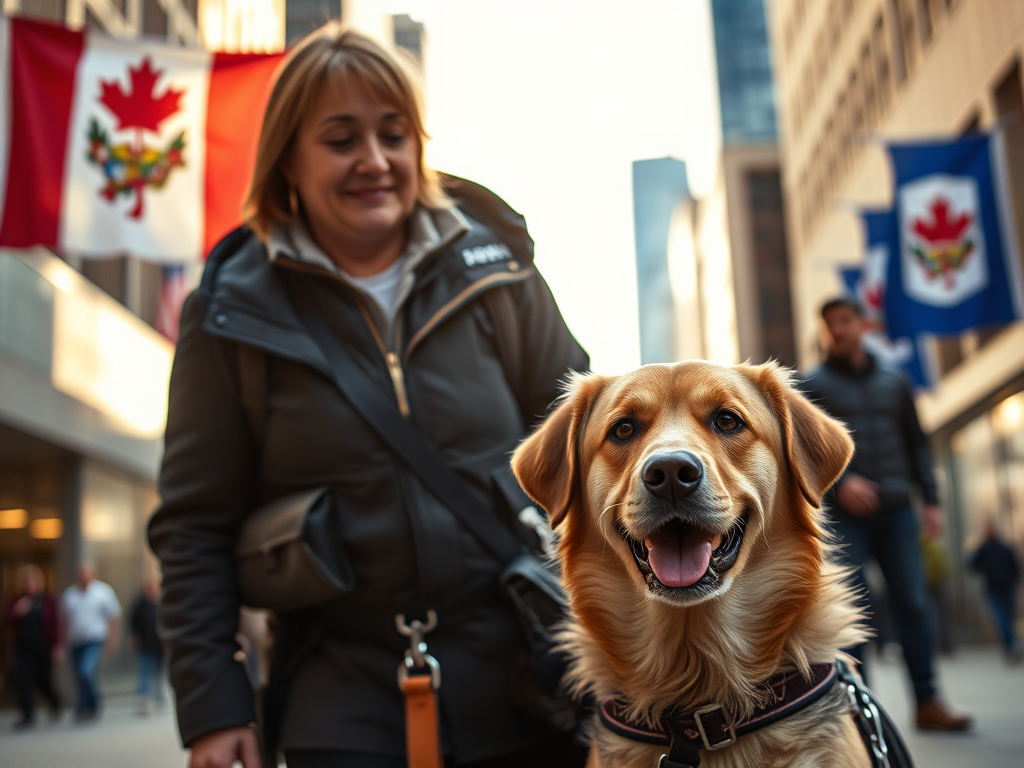
    It’s only the beginning of my summer break, and my mind is already buzzing with creativity, energy, and a desire for new experiences. This summer promises to be incredibly productive. Expect more engaging posts about the real world of education, my guide dog adventures, and much more.

    I’m committed to increasing my posting frequency beyond just a few times a month. My goal is to publish a post every day throughout July and maintain a weekly schedule thereafter. Believe me, I have a wealth of ideas to share, enough to keep content flowing for months!

  • Letter to Danielle Smith Premier of Alberta

    Letter to Danielle Smith Premier of Alberta

    ATTN Premier Danielle Smith

    CC: Christina Gray Official Leader of the Opposition

    Subject: Urgent Action Required: Addressing Discrimination Against Service and Guide Dog Handlers in Alberta

    Dear Premier Danielle Smith,

    I am writing to you, and copying the New Democrat Party of Alberta, to address the persistent and systemic discrimination faced by service and guide dog handlers in Alberta. This issue requires immediate and decisive action.

    While Alberta has three pieces of legislation intended to protect our rights—the Service Dogs Act, the Blind Persons’ Rights Act, and the Alberta Human Rights Act—these laws are demonstrably failing to provide adequate protection. The continued prevalence of discrimination indicates a significant gap between legislative intent and practical enforcement.

    Specifically, I wish to highlight the following critical issues:

    • Lack of Enforcement and Training:
      • The effectiveness of these acts hinges on consistent enforcement by law enforcement. However, there is a clear lack of training and education among police officers regarding the specific provisions and enforcement procedures of these laws.
    • Inaccessible Complaint Processes:
      • The current complaint processes are opaque and often ineffective, leaving handlers feeling unheard and without recourse. This is particularly evident in the context of rideshare services, where discrimination is rampant. My personal experience has led me to discontinue using Uber and Lyft due to repeated discriminatory incidents. Even conventional taxi services pose a concern, as drivers frequently operate across multiple platforms.
      • Municipal complaint processes are also proving to be stressful and ineffective, and do not provide adequate resolution.
    • Disparity in Legal Treatment:
      • There is a stark disparity in how discriminatory acts are treated. Discrimination based on race, ethnicity, religion, or gender can be classified as a hate crime, prompting immediate police response. However, discrimination against service dog handlers is often dismissed as a civil matter, resulting in inaction. This disparity is unacceptable and undermines the fundamental principle of equality.

    The ongoing discrimination against service dog handlers constitutes a violation of our Charter rights to freedom of movement and equality. The provincial government’s current approach demonstrates a clear complacency and negligence in protecting the rights of disabled Albertans.

    I urge you to consider the following:

    • Implement mandatory and comprehensive training for all law enforcement officers on the Service Dogs Act, the Blind Persons’ Rights Act, and related anti-discrimination legislation.
    • Establish a streamlined and accessible complaint process that ensures timely and effective resolution of discrimination cases.
    • Institute harsher penalties for individuals and businesses that violate the rights of service and guide dog handlers.
    • Review the current legislation to close loopholes that are being used to discriminate.

    As a taxpayer and citizen of Alberta, I am deeply frustrated by the lack of meaningful action to address this pervasive discrimination. We deserve to be treated with dignity and respect, and to have our rights protected.

    I request a prompt and substantive response outlining the steps your government will take to rectify this critical issue.

    Sincerely,

    Douglas Rudolph

    douglas.rudolph92@gmail.com

    780-237-2196

  • I Did It, It Is Done – My Final Shift Into CHROME OS

    I Did It, It Is Done – My Final Shift Into CHROME OS

    Alright, tech aficionados, gather ’round! I’ve just executed a major OS migration, a digital leap of epic proportions! 🚀

    Operation: Windows Exodus is a GO!

    Yes, you heard it right! I’ve performed a clean uninstall of the Windows paradigm from my daily driver experience. The digital curtains have dropped, the proverbial “blue screen of sadness” is banished, and a new era dawns! 🌅

    The Great System Audit: A Deep Dive into My Digital Ecosystem 🔍

    For weeks, nay, months, I’ve been running a rigorous analysis of my computational needs. With a fleet of three devices at my disposal, I embarked on a journey of self-discovery: “Which OS truly resonates with my workflow? Which platform delivers the optimal user experience?” After meticulous data collection and analysis (read: staring intensely at screens), a clear winner emerged. 🏆

    Farewell, Windows! Initiating Chrome OS Protocol! 💻➡️🌐

    For a significant portion of my digital existence, Windows has been my primary operating system, a stalwart companion in the realm of personal computing (save for that brief, experimental phase with macOS). However, the allure of Chrome OS, with its streamlined interface, intuitive functionality, and cloud-centric architecture, proved irresistible. 💖

    Let’s face it: my once-beloved Windows rig was languishing, a relic of a bygone era. Usage logs revealed a startling truth: a mere three brief encounters in the past six months! It was time to pull the plug. 🔌

    Windows, you will always hold a sentimental place in my digital history, but my needs have evolved. I crave a lean, mean, computing machine—a system that “just works,” without the bloat and overhead of legacy platforms. 🤖

    No more wrestling with antivirus software, deciphering convoluted file storage hierarchies, or navigating the treacherous waters of inconsistent cloud synchronization. The days of OneDrive vs. Google Drive are over! ⚔️

    Engaging Chrome OS: A Quantum Leap in User Experience!

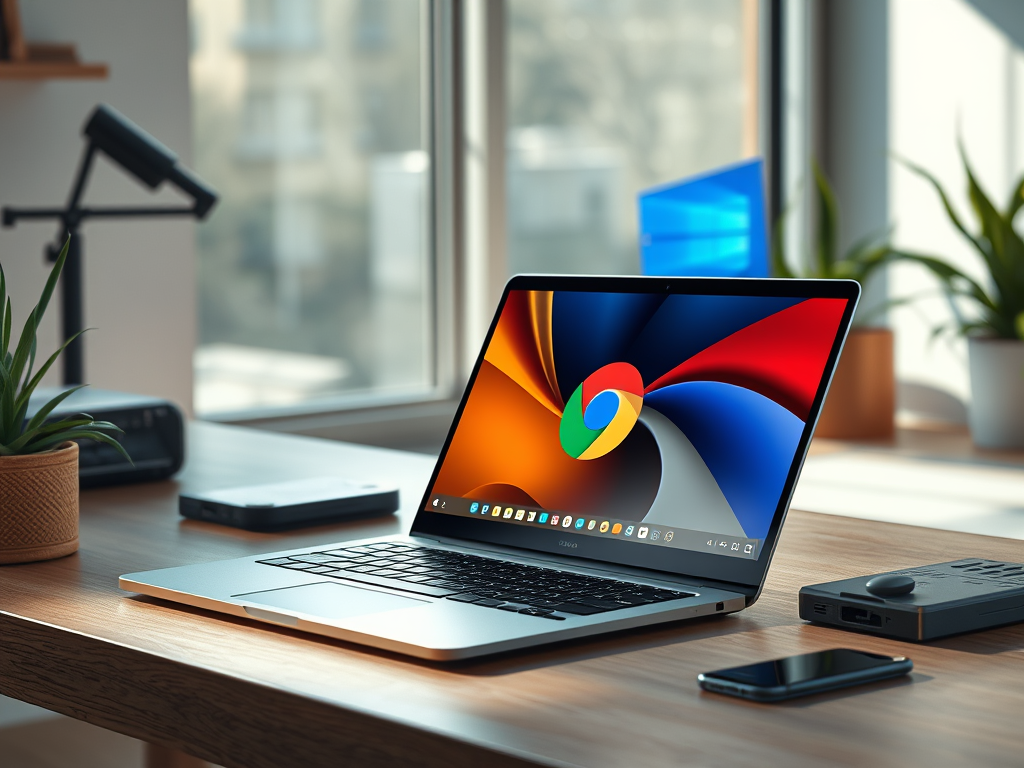
    I’ve embraced the Chrome OS ecosystem, a paradigm shift towards a more efficient, secure, and cloud-integrated computing experience. The sleek, minimalist interface of my new Chrome OS laptops is a breath of fresh air, a testament to the power of streamlined design. 🌬️

    This isn’t just a switch; it’s a strategic upgrade. It’s about optimizing my workflow, maximizing my productivity, and embracing the future of computing. Join me on this exciting journey into the realm of Chrome OS! 🚀✨

  • The Illusion of Progress: Access Refusals Persist

    The Illusion of Progress: Access Refusals Persist

    I used to believe we were making strides. With my first guide dog, access issues were minimal, often resolved through simple education. But the reality is starkly different now. The past two years with my current guide dog have revealed a disheartening truth: service dog refusals are rampant.

    Business Access: A Glimmer of Hope

    Fortunately, most businesses are understanding. Inquiries about my service dog, while sometimes tedious, are generally well-intentioned and easily addressed. Outright denial of entry is rare.

    The Rideshare and Taxi Nightmare

    However, taxis and rideshares remain a battleground. Drivers, your vehicles are public access when you offer your services. Service dogs are essential tools, akin to medical equipment. Refusing us is illegal and inhumane. Why do you persist in stranding us in extreme weather or on dangerous roadsides?

    People with disabilities are living in fear. We dread being abandoned, exploited, and left without recourse. This must end.

    Legal Protections and Enforcement Failures

    Alberta’s Service Dogs Act, Blind Persons’ Rights Act, and Human Rights Act are meant to protect us. Yet, enforcement is woefully inadequate. Fines are not a deterrent. We need real consequences: license suspensions, stricter regulations, and consistent enforcement.

    Why are police departments treating these offenses as civil matters when they carry provincial penalties? Is this a training issue, a dispatch issue, or a systemic failure?

    The Emotional Toll and Systemic Injustice

    We are exhausted. The psychological and emotional toll of these refusals is real and debilitating. Just yesterday, my partner and I, along with her guide dog, experienced another ride refusal. Witnessing her distress and being powerless to stop it was a new level of emotional exhaustion and anger. This was only made worse by the fact that initial contact was between the driver and me, which was where the ride refusal nightmare began.  It felt akin to watching a double injustice unfold.

    The government’s inaction leaves us feeling abandoned and unprotected.

    The Need for Accountability: A Call to Action

    It’s clear that the government is failing to uphold our rights. We are not second-class citizens. We demand accountability. We demand enforcement of existing laws. We demand change.

    At this point, a lawsuit against the Alberta government may be the only way to hold them accountable for the trauma, fear, distrust, and continued discrimination faced by people with disabilities. We must demand that the protections we have on paper become a reality. We must demand change, now.

  • An Open Letter To The Government Of Alberta MLAs

    An Open Letter To The Government Of Alberta MLAs

    Subject: Urgent Action Needed: Addressing Discrimination Against Guide and Service Dog Users in Alberta

    Dear Members of the Legislative Assembly of Alberta,

    I am writing on behalf of guide dog, service dog, and service dog in training handlers in Alberta to address a critical issue of systemic discrimination that significantly impacts our community. We are experiencing frequent ride refusals from both ride-sharing and traditional taxi services, a direct violation of the Blind Persons’ Rights Act and the Service Dogs Act of Alberta. Despite these clear legal protections, enforcement is demonstrably lacking, and police response to these incidents of discrimination is inadequate.

    These refusals severely restrict the independence, safety, and freedom of movement of Albertans who rely on guide and service dogs. These animals are essential for our participation in daily life, providing crucial support and enabling us to navigate the world. The constant denial of service sends a message that our rights as persons with disabilities are not valued and that we are, in effect, less than full members of society.

    While some drivers cite allergies, fear, or religious beliefs as justification for refusing service, these claims are often not substantiated with the appropriate regulatory bodies (city licensing boards). This lack of accountability allows discriminatory practices to continue unchecked. The consequences of these refusals can be severe, leaving individuals stranded in dangerous situations, including on major freeways or in extreme weather conditions.

    The process for reporting these incidents is excessively burdensome, placing a disproportionate amount of emotional labor and effort on individuals already facing significant challenges. Furthermore, the reporting often yields unsatisfactory outcomes. We see little to no evidence of penalties levied against offending drivers or effective enforcement action taken to prevent future occurrences. This lack of meaningful recourse exacerbates the frustration and fear experienced by our community.

    This ongoing discrimination prevents persons with disabilities from fully participating in society and exercising our constitutionally and charter-protected rights. We simply seek to access the same goods and services as non-disabled individuals and to live our lives with dignity and autonomy. Guide and service dogs are not merely pets; they are essential medical aids, comparable to wheelchairs or oxygen tanks, and denying access to individuals accompanied by these animals is akin to denying access to essential medical equipment, a clear violation of the law.

    We urge the Legislative Assembly to take immediate and decisive action to address this urgent matter. We need:

    • Stronger enforcement of the Blind Persons’ Rights Act and the Service Dogs Act.
    • Increased accountability for drivers who discriminate against guide and service dog users.
    • Streamlined reporting processes that minimize the burden on individuals with disabilities.
    • Meaningful penalties for those who violate the law.

    We are tired of fighting for our basic rights. We are tired of being treated as second-class citizens. We are asking for your support in ensuring that Albertans with disabilities can live full and equitable lives. We look forward to your prompt response and a commitment to action.

  • From Cane to Guide Dog 2.0: Lessons Learned About Myself

    From Cane to Guide Dog 2.0: Lessons Learned About Myself

    We all learn about ourselves as we navigate life’s various stages and experiences. This is especially true for those of us with vision loss who use canes, guide dogs, or both. This post reflects my personal journey as a cane user, a guide dog handler, and someone with fluctuating, unreliable residual vision.

    Lesson 1: I Over-Rely on My Sight

    This was a tough pill to swallow because I didn’t even realize I was doing it. For as long as I can remember, I used my vision to supplement my independent travel, hoping it would catch what my cane missed or identify obstacles at head level. I had no idea how problematic this was until I’d had my first guide dog, Indy, for about a year. We started having serious navigational issues.

    Indy, my first little yellow boy, was incredibly smart – almost too smart. The problem? My residual vision was interfering. Instead of guiding me around hazards, he was leading me towards them, walking me right on the edge of sidewalks, and generally making me feel unsafe. I contacted my guide dog program for help. During a session with a trainer, we discovered the root of the problem: I was using my vision, however limited, to override Indy’s trained responses and intelligent disobedience. He was doing his job, but I wasn’t letting him. This resulted in a massive communication breakdown and created dangerous situations.

    The takeaway? Just because you have some residual vision doesn’t mean you should use it all the time. Sometimes, the best thing is to trust your dog and let them do what they’re trained to do. Use your vision sparingly, perhaps for identifying visual landmarks to aid in route-finding. With my second guide dog, I’ve noticed a huge difference when I consciously avoid using my vision. He navigates much more smoothly and confidently.

    The challenge is becoming aware of when you’re using your vision. It’s often subconscious. Those of us trained in Orientation and Mobility (O&M) who learned to use auditory, visual, and tactile cues together will likely struggle with this the most. It’s okay to have these moments of accidental over-reliance, but the sooner you recognize the pattern, the sooner you can prevent it.

    Lesson 2: Trust the Process (and the Dog)

    Related to the first lesson, I’ve learned the importance of trusting the process and, more importantly, trusting my dog. It’s easy to second-guess, especially when you’re used to relying on your vision. But a guide dog is trained to make decisions based on a wealth of information – scent, sound, and tactile cues – that we can’t access. When I try to “help” by using my vision, I often introduce conflicting information and confuse my dog. This not only disrupts their focus but can also undermine their confidence.

    Learning to let go and trust my dog has been a process. It requires conscious effort and constant self-monitoring. I have to remind myself that my dog is a highly trained professional, and I’m the amateur. The more I trust, the smoother and safer our travels become.

    Lesson 3: Communication is Key (Even Without Words)

    Effective communication is crucial in any relationship, and the bond between a guide dog and handler is no exception. While we can’t verbally communicate with our dogs, we communicate through subtle cues – leash pressure, body language, and even our emotional state. Learning to read my dog’s cues has been just as important as him learning to read mine. He tells me when he’s unsure, when he’s detected a hazard, and even when he’s just feeling playful. Learning to listen to these nonverbal cues has strengthened our bond and improved our teamwork.

    Lesson 4: Patience is a Virtue (Especially with Yourself)

    Learning to work with a guide dog is a journey, not a destination. There will be good days and bad days, moments of frustration and moments of pure joy. It’s crucial to be patient – not just with your dog but with yourself. It takes time to build trust, develop effective communication, and learn to navigate the world as a team. There will be setbacks, but it’s important to remember that progress isn’t always linear. Celebrate the small victories, learn from the mistakes, and keep moving forward.

    Lesson 5: Adaptability is Essential

    Life with a guide dog is full of surprises. Unexpected obstacles, changes in environment, and even the dog’s mood can impact a journey. Being adaptable and flexible is crucial. Sometimes, you have to change your route, slow down, or even take a break. Learning to roll with the punches and adjust to changing circumstances has made me a more resilient and resourceful traveler.

    Conclusion

    My journey from cane to guide dog (and now guide dog 2.0) has been a profound learning experience. It’s taught me about self-awareness, trust, communication, patience, and adaptability. These lessons extend far beyond navigating the physical world; they’ve enriched my life in countless ways. While there have been challenges, the rewards of working with a guide dog are immeasurable. The independence, companionship, and unconditional love they offer are truly life-changing.

  • My Screen Reader Experience: A World of Choices

    My Screen Reader Experience: A World of Choices

    For years, JAWS (Job Access With Speech) was the screen reader in North America, alongside the built-in VoiceOver on macOS. Then came NVDA, shaking things up. Finally, we have the ubiquitous ChromeVox, the built-in screen reader on all Chrome OS devices. Let’s explore my experiences with each, considering their platforms and target users.

    JAWS: Sink or Swim?

    This shark-themed screen reader was one of the first on Windows. I remember it running on DOS/Windows 3.1 as a separate piece of hardware – talk about ancient history! Today, you can download it… after paying a hefty price. Last I checked, a license cost around $1,000 Canadian, not including updates.

    Personally, I found JAWS incredibly frustrating. It always seemed slower than me, struggling to keep up with my typing and lagging during simple tasks. I later realized it’s a resource hog, demanding massive amounts of RAM. While they recommend 4GB, I’d suggest nothing less than 8GB, preferably 12GB. Anything less leads to lag, slowdowns, and crashes.

    VoiceOver: A Breath of Fresh Air

    Just as I was about to give up on JAWS, I discovered VoiceOver thanks to the iPhone. I fell in love with its ease of use, clean functionality, and ability to keep pace with me. This led me to buy a Mac. I lived in the Apple ecosystem for several years during university, using a MacBook Air and a MacBook Pro. It was incredibly liberating to use a system that thrived on 8GB of RAM, felt fast and responsive, and rarely crashed. VoiceOver on Mac was, and still is, one of my favorite screen readers.

    NVDA: Free, Adaptable, and Flexible

    NVDA is FREE! This amazing open-source software is flexible, adaptable, and highly functional, and it won’t break the bank. They do accept donations, and you can choose how much (or nothing) to give.

    NVDA breathed new life into Windows for me. It’s fast, responsive, adaptable, and smoother than JAWS. Dare I say it’s the Windows equivalent of VoiceOver? I’ve been using NVDA on my personal Windows laptop for five years and love it. It can do everything JAWS could, and even allows for reprogramming (if you know Python, which I don’t).

    ChromeVox: My New Love

    Okay, enough with the sappiness… but ChromeVox on Chrome OS is truly smooth and unique. It operates within Chrome OS and provides the same system-level access as other screen readers. The key difference? It runs amazingly well even on sub-$500 Chromebooks. Whether you have 4GB or 16GB of RAM, a 12-inch or 16-inch screen, ChromeVox performs. It connects to most mainstream braille displays and has a built-in magnification system, though the built-in magnifier isn’t as flexible as I’d like for my dual-screen setup. Still, we’re focusing on ChromeVox’s fluid function.

    From the moment you power on your Chromebook, you’re a key command away from independent system setup. Just press Ctrl+Alt+Z, and you’ll hear that familiar Google voice.

    I’ve been daily driving ChromeVox for several weeks now, and intermittently for years, and I can honestly say it will soon be my primary screen reader. I’m not even sure a traditional PC has a place in my life anymore.

    Conclusion

    The world of screen readers has evolved significantly. From the expensive and resource-heavy JAWS to the streamlined VoiceOver, the adaptable NVDA, and the surprisingly powerful ChromeVox, users now have a range of choices. My journey has highlighted the importance of accessibility, performance, and cost-effectiveness. While each screen reader has its strengths and weaknesses, the rise of free and efficient options like NVDA and ChromeVox has democratized access to technology for visually impaired users. Ultimately, the “best” screen reader depends on individual needs and preferences, but the availability of diverse options is a huge win for accessibility.

  • The Good, the Bad, and the Ugly: Food Delivery App Accessibility

    The Good, the Bad, and the Ugly: Food Delivery App Accessibility

    In today’s fast-paced world, the gig economy has exploded, with Uber Eats, SkipTheDishes, DoorDash, and Instacart dominating the Canadian landscape. While these services offer convenience, especially for people with disabilities, a closer look reveals a darker side. Let’s explore the accessibility of customer service, communication with delivery drivers/shoppers, app accessibility itself, and, crucially, pricing models. Each has its share of “sketchy” elements and raises concerns about long-term use, particularly for those with disabilities or fixed incomes.

    The Good: A Game Changer for Many

    These apps have undeniably done a lot of good, especially for people with disabilities. During the pandemic, they provided a lifeline for immunocompromised individuals, allowing them to access groceries and meals without risking close contact. They offer menu access for those with vision loss and reduce the stress of grocery shopping. The benefits are numerous, but to avoid boring you, let’s move on to the less rosy aspects.

    The Bad: Pricing and Transparency Issues

    Despite the advantages, several aspects of these platforms are problematic. Pricing models and product availability are particularly concerning.

    You might find items in your local grocery store that aren’t available on Instacart. This likely stems from purchase volume; items with low demand through the platform probably won’t be listed. While understandable from a business perspective, it limits choices.

    Even more troubling is the price markup between in-store prices and what you see on the apps. This can range from a few cents to several dollars per item. Some stores advertise “in-store pricing,” but many don’t disclose whether their app prices match or exceed in-store costs. Often, even when advertised as “same as in-store,” prices are higher. This inconsistency creates a financial burden and confusion. How can you budget when you’re unsure of the real price?

    Finally, the hidden fees are a major issue. Why aren’t all fees (service fees, delivery fees, etc.) disclosed upfront? Why are we only informed at checkout? Why isn’t the service fee structure explained before we even start shopping? This feels predatory, especially for those on fixed incomes who need to stretch their budgets. Imagine having to drastically reduce your order at the last minute because of unexpected fees.

    The Ugly: SkipTheDishes and its Accessibility Fail

    Now, for the “ugly” part, I’m calling out SkipTheDishes. If you’ve ever had an issue with a SkipTheDishes order, you’re probably familiar with their in-app customer service chat. While I understand the shift away from phone support, this platform is deeply flawed for visually impaired users who rely on screen readers. The chat function is only partially accessible. You can read your own messages, but the customer service representative’s replies are often unreadable by screen readers. SkipTheDishes has been made aware of this accessibility issue and has yet to fix it.

    My workaround? Facebook Messenger. Yes, I’m using social media to resolve order issues because their dedicated in-app support is inaccessible. This is unacceptable.

    Conclusion: A Call for Change

    I’ve stopped using SkipTheDishes, even if they sometimes have better menu options. Instacart, despite its pricing and fee opacity, remains the most viable option for grocery delivery for now.

    I hope this post makes you aware of the challenges you might encounter, the confusing pricing and fee structures, and the potential difficulties in getting customer support. We need to demand better from these companies. Accessibility shouldn’t be an afterthought; it should be a core principle. Transparency in pricing and fees is essential. And customer support should be accessible to everyone, regardless of disability. These platforms offer a valuable service, but they need to do better to ensure they’re truly serving the entire community.

  • Rideshare Affordability: Highway Robbery or Necessary Evil?

    Rideshare Affordability: Highway Robbery or Necessary Evil?

    Let’s talk about the financial accessibility of rideshare services, specifically how cold weather and surge pricing can make them feel like a highway robbery. My partner and I recently experienced this firsthand, and it got me thinking about how these pricing models impact people, especially those on fixed or limited incomes. I want to explore two scenarios: cold weather and surge pricing, both of which present unique challenges.

    Cold Weather: Frozen Out of Options (and Funds)

    Picture this: You drag yourself out of bed, peek at the weather, and it’s -30°C before windchill – that’s roughly -40°C with it. Way too cold to walk, even if your destination is just a few blocks away. So, you check Lyft. Imagine the frustration when you see that a short trip for two people will cost around $25. That’s about $15 more than usual, and also about $15 more than pre-booking a ride with a traditional taxi service.

    Let’s unpack this. Extreme cold isn’t just uncomfortable; it’s a safety hazard. Walking in those temperatures can lead to frostbite, hypothermia, and other serious health risks. For people without other transportation options, a rideshare becomes a necessity, not a luxury. But when prices skyrocket due to demand, those who need the service most might be priced out of it. This creates a difficult situation: risk your health by walking, or break the bank for a ride? It shouldn’t be an either/or situation.

    Think about the implications for essential workers who start early or finish late, when public transit might be limited or nonexistent. Or consider elderly individuals or people with disabilities who may be particularly vulnerable to the cold. A sudden cold snap can turn a normally affordable commute into a significant financial burden. This raises the question: should rideshare services have a responsibility to provide accessible transportation during extreme weather events, or is it simply a matter of supply and demand? Perhaps a capped cold-weather surcharge, or partnerships with local organizations to subsidize rides for vulnerable populations, could be a solution.

    Surge Pricing: The Mystery of the Multiplying Fare

    Traditional taxi services sometimes have surcharges, but rideshare surge pricing seems to operate on a whole different level. Need a ride during rush hour, or to/from a busy area? Prepare to pay a premium. The problem is the lack of transparency. I’ve never been able to find a clear explanation of how surge pricing is calculated or when it’s activated. It feels arbitrary, and sometimes, even exploitative.

    Let’s dive deeper into the complexities of surge pricing. While it’s often justified as a way to incentivize drivers to work during peak demand, the lack of predictability can be incredibly frustrating for riders. Imagine budgeting for a trip, only to find the price has doubled or tripled by the time you’re ready to book. This makes it difficult to plan and can lead to unexpected financial strain.

    Furthermore, the algorithms that determine surge pricing can be opaque. Are they truly responding to real-time supply and demand, or are other factors at play? There have been concerns about algorithms potentially targeting specific demographics or areas, leading to price discrimination. Without more transparency, it’s hard to trust that surge pricing is always fair.

    What if rideshare companies were required to provide clear and upfront information about surge pricing, including the factors that trigger it and how it’s calculated? Perhaps a cap on surge multipliers, or a system that allows riders to see how prices have fluctuated over time, could give them more control over their spending.

    The Bigger Picture: Accessibility and Equity

    Ultimately, the issue comes down to accessibility and equity. When fees, extra charges, and price hikes make a service unaffordable, it becomes less accessible to those who may need it most. When pricing models aren’t transparent, these extra charges can feel like a form of price gouging. This raises fundamental questions about who these services are for. If they become unaffordable when vulnerable people need them most, are they truly serving the community?

    If affordable transportation options aren’t available, people may be left with no choice but to brave the elements, potentially putting their health at risk. Or they may be forced to forgo essential trips, impacting their ability to work, access healthcare, or participate in social activities. This can have far-reaching consequences, exacerbating existing inequalities.

    So, do surge pricing and cold-weather surcharges have a place in the rideshare ecosystem? Perhaps, but they need to be implemented in a way that is fair, transparent, and doesn’t disproportionately burden vulnerable populations. We need a broader conversation about how to ensure that transportation services are truly accessible to everyone, regardless of income or circumstance.

  • Lets Talk Tech – Dive Into My Ecosystem

    Lets Talk Tech – Dive Into My Ecosystem

    Hey everyone! Let’s talk tech. Over the past few years, I’ve amassed quite a collection, some thanks to a fantastic program through Google, and some I’ve bought myself. All of it has impacted my life, made me think differently about accessibility, and introduced me to platforms I now use every single day. So, let’s dive into my world of smartphones, smartwatches, and computers/tablets. (We’ll save smart home tech, like Firesticks and Chromecasts, for another post!)

    Smartphones: From Flips To Candy Bar Phones

    My current daily driver is the Samsung Galaxy S23+, but it’s a recent switch. Before this, I was rocking the amazing Z Flip 5. Why the change? It was really a matter of opportunity.

    The Z Flip 5: A Flashy Throwback

    The Z Flip 5 was, and still is, my absolute favorite phone. Even with its slightly unusual screen ratio, it was incredible. The outer screen was so functional, it blew my mind. Pair it with a good case, and you’ve got a flashy, flippy throwback to the early 2010s and those iconic flip phones. Remember the original Motorola RAZR? Enough said.

    The Z Flip 5’s One Downside

    The only real con? The inner screen. Because it’s flexible, it needs a special screen protector that costs about $80 to replace here in Alberta. Having to do that every six months gets expensive.

    My S23+: Back to Basics (But Better)

    I got a great deal on the S23+, and it made me realize why I still love the classic “candy bar” style. While I miss the Z Flip’s foldability, the S23+ has a bigger battery, better cooling, and oh my goodness, a much better camera. Samsung makes amazing devices across the board – you have to give them that – but the camera on the S23+ is a vital tool for me.

    A History of Phones

    I’ve used everything from a Samsung S5 to the S23+, a Pixel 4A, Moto devices, and even an iPhone (gasp!). So why Samsung? Well, it ties into my next category…

    Smartwatches: More Than Just Time

    My smartwatch journey started with a cheap, used Asus Android Wear watch. I was hooked, not just for telling time, but for notifications, step counting, and so much more. And they’re accessible!

    After that first watch shuffled off this mortal coil, I got a Mobvoi TicWatch 5E. It was the more budget-friendly version of the TicWatch 5, and I loved it. I did have some minor accessibility issues with the Mobvoi apps, but the watch itself cemented my love for smartwatches.

    Then, I found a deal on a Samsung Galaxy Watch 4 Classic – you know, the one that doubled as a fidget spinner! I used it for a few months until that update. You know, the one that was supposed to fix the bricking issues from the previous update… and promptly bricked my watch.

    So, I needed a new one. Tough choice: something similar in size and sportier, or the Watch 5 Pro – chunkier, but tougher with titanium and sapphire glass? I went Pro, because let’s be honest, I’m rough on my tech. It’s still going strong after three years! And the Watch 5 Pro is a big reason I stick with Samsung phones. Features like ECG and blood pressure monitoring are unique to the Samsung ecosystem, and as someone with high blood pressure, those are important to me.

    Laptops: From Bricks to Beasts

    My laptop history is… eventful. I had a Lenovo IdeaPad that bricked itself with corrupted files. Then, I got a used 17-inch HP EliteBook, which was amazing (wi-fi issues aside). On a whim, I bought a Lenovo ThinkPad 2-in-1, and loved it! It was my daily driver until it couldn’t keep up anymore.

    Enter the Samsung Galaxy Book! This sleek, slim, non-touchscreen machine was, and still is, a micro-beast. It’s small but powerful.

    But, I have to confess, my true love right now is Chromebooks. Thanks to that Google program, I got to try a Pixelbook, and I still use it daily at work. I also loved the Lenovo Duet 5, which I traded with my partner for her monstrous 16-inch Asus CX5601 Chromebook. That Asus? My new favorite. It’s fast, has an amazing keyboard and trackpad, and all the ports I need.

    My current home workspace setup? My Samsung Galaxy Book connected to a beautiful 32-inch monitor and a 42 or 46-inch TV. And beside that beast, I have my trusty Brother monochrome laserjet printer.

    Tablets: Less Used These Days

    Since I have a 2-in-1 touchscreen laptop, I don’t use tablets much anymore. I do have a Pixel Tablet, but it mostly lives on its dock in the bedroom. I’ve used everything from iPads to Samsung Galaxy Tabs, and they all have their pros and cons. It really depends on what you need a tablet for.

    So, that’s a glimpse into my tech journey. I love how each piece has influenced my next purchase. I think I’m heading towards a full Chrome OS ecosystem. I’ve already ditched my Microsoft 365 subscription and kept Google Workspace for the extra Drive space. Google is making serious waves, creating functional and fantastic mobile operating systems. Android and Chrome OS? They’re my daily drivers.