Category: The Ramblings Of The Under caffeinated

  • The Good, the Bad, and the Ugly: Food Delivery App Accessibility

    The Good, the Bad, and the Ugly: Food Delivery App Accessibility

    In today’s fast-paced world, the gig economy has exploded, with Uber Eats, SkipTheDishes, DoorDash, and Instacart dominating the Canadian landscape. While these services offer convenience, especially for people with disabilities, a closer look reveals a darker side. Let’s explore the accessibility of customer service, communication with delivery drivers/shoppers, app accessibility itself, and, crucially, pricing models. Each has its share of “sketchy” elements and raises concerns about long-term use, particularly for those with disabilities or fixed incomes.

    The Good: A Game Changer for Many

    These apps have undeniably done a lot of good, especially for people with disabilities. During the pandemic, they provided a lifeline for immunocompromised individuals, allowing them to access groceries and meals without risking close contact. They offer menu access for those with vision loss and reduce the stress of grocery shopping. The benefits are numerous, but to avoid boring you, let’s move on to the less rosy aspects.

    The Bad: Pricing and Transparency Issues

    Despite the advantages, several aspects of these platforms are problematic. Pricing models and product availability are particularly concerning.

    You might find items in your local grocery store that aren’t available on Instacart. This likely stems from purchase volume; items with low demand through the platform probably won’t be listed. While understandable from a business perspective, it limits choices.

    Even more troubling is the price markup between in-store prices and what you see on the apps. This can range from a few cents to several dollars per item. Some stores advertise “in-store pricing,” but many don’t disclose whether their app prices match or exceed in-store costs. Often, even when advertised as “same as in-store,” prices are higher. This inconsistency creates a financial burden and confusion. How can you budget when you’re unsure of the real price?

    Finally, the hidden fees are a major issue. Why aren’t all fees (service fees, delivery fees, etc.) disclosed upfront? Why are we only informed at checkout? Why isn’t the service fee structure explained before we even start shopping? This feels predatory, especially for those on fixed incomes who need to stretch their budgets. Imagine having to drastically reduce your order at the last minute because of unexpected fees.

    The Ugly: SkipTheDishes and its Accessibility Fail

    Now, for the “ugly” part, I’m calling out SkipTheDishes. If you’ve ever had an issue with a SkipTheDishes order, you’re probably familiar with their in-app customer service chat. While I understand the shift away from phone support, this platform is deeply flawed for visually impaired users who rely on screen readers. The chat function is only partially accessible. You can read your own messages, but the customer service representative’s replies are often unreadable by screen readers. SkipTheDishes has been made aware of this accessibility issue and has yet to fix it.

    My workaround? Facebook Messenger. Yes, I’m using social media to resolve order issues because their dedicated in-app support is inaccessible. This is unacceptable.

    Conclusion: A Call for Change

    I’ve stopped using SkipTheDishes, even if they sometimes have better menu options. Instacart, despite its pricing and fee opacity, remains the most viable option for grocery delivery for now.

    I hope this post makes you aware of the challenges you might encounter, the confusing pricing and fee structures, and the potential difficulties in getting customer support. We need to demand better from these companies. Accessibility shouldn’t be an afterthought; it should be a core principle. Transparency in pricing and fees is essential. And customer support should be accessible to everyone, regardless of disability. These platforms offer a valuable service, but they need to do better to ensure they’re truly serving the entire community.

  • Rideshare Affordability: Highway Robbery or Necessary Evil?

    Rideshare Affordability: Highway Robbery or Necessary Evil?

    Let’s talk about the financial accessibility of rideshare services, specifically how cold weather and surge pricing can make them feel like a highway robbery. My partner and I recently experienced this firsthand, and it got me thinking about how these pricing models impact people, especially those on fixed or limited incomes. I want to explore two scenarios: cold weather and surge pricing, both of which present unique challenges.

    Cold Weather: Frozen Out of Options (and Funds)

    Picture this: You drag yourself out of bed, peek at the weather, and it’s -30°C before windchill – that’s roughly -40°C with it. Way too cold to walk, even if your destination is just a few blocks away. So, you check Lyft. Imagine the frustration when you see that a short trip for two people will cost around $25. That’s about $15 more than usual, and also about $15 more than pre-booking a ride with a traditional taxi service.

    Let’s unpack this. Extreme cold isn’t just uncomfortable; it’s a safety hazard. Walking in those temperatures can lead to frostbite, hypothermia, and other serious health risks. For people without other transportation options, a rideshare becomes a necessity, not a luxury. But when prices skyrocket due to demand, those who need the service most might be priced out of it. This creates a difficult situation: risk your health by walking, or break the bank for a ride? It shouldn’t be an either/or situation.

    Think about the implications for essential workers who start early or finish late, when public transit might be limited or nonexistent. Or consider elderly individuals or people with disabilities who may be particularly vulnerable to the cold. A sudden cold snap can turn a normally affordable commute into a significant financial burden. This raises the question: should rideshare services have a responsibility to provide accessible transportation during extreme weather events, or is it simply a matter of supply and demand? Perhaps a capped cold-weather surcharge, or partnerships with local organizations to subsidize rides for vulnerable populations, could be a solution.

    Surge Pricing: The Mystery of the Multiplying Fare

    Traditional taxi services sometimes have surcharges, but rideshare surge pricing seems to operate on a whole different level. Need a ride during rush hour, or to/from a busy area? Prepare to pay a premium. The problem is the lack of transparency. I’ve never been able to find a clear explanation of how surge pricing is calculated or when it’s activated. It feels arbitrary, and sometimes, even exploitative.

    Let’s dive deeper into the complexities of surge pricing. While it’s often justified as a way to incentivize drivers to work during peak demand, the lack of predictability can be incredibly frustrating for riders. Imagine budgeting for a trip, only to find the price has doubled or tripled by the time you’re ready to book. This makes it difficult to plan and can lead to unexpected financial strain.

    Furthermore, the algorithms that determine surge pricing can be opaque. Are they truly responding to real-time supply and demand, or are other factors at play? There have been concerns about algorithms potentially targeting specific demographics or areas, leading to price discrimination. Without more transparency, it’s hard to trust that surge pricing is always fair.

    What if rideshare companies were required to provide clear and upfront information about surge pricing, including the factors that trigger it and how it’s calculated? Perhaps a cap on surge multipliers, or a system that allows riders to see how prices have fluctuated over time, could give them more control over their spending.

    The Bigger Picture: Accessibility and Equity

    Ultimately, the issue comes down to accessibility and equity. When fees, extra charges, and price hikes make a service unaffordable, it becomes less accessible to those who may need it most. When pricing models aren’t transparent, these extra charges can feel like a form of price gouging. This raises fundamental questions about who these services are for. If they become unaffordable when vulnerable people need them most, are they truly serving the community?

    If affordable transportation options aren’t available, people may be left with no choice but to brave the elements, potentially putting their health at risk. Or they may be forced to forgo essential trips, impacting their ability to work, access healthcare, or participate in social activities. This can have far-reaching consequences, exacerbating existing inequalities.

    So, do surge pricing and cold-weather surcharges have a place in the rideshare ecosystem? Perhaps, but they need to be implemented in a way that is fair, transparent, and doesn’t disproportionately burden vulnerable populations. We need a broader conversation about how to ensure that transportation services are truly accessible to everyone, regardless of income or circumstance.

  • Unions: A Double-Edged Sword

    Unions: A Double-Edged Sword

    Let’s be blunt: the topic of unions is divisive. While some may tout their benefits, I firmly believe that strike action, in particular, is a destructive force that inflicts far more harm than good. I will not mince words: strikes impoverish workers, erode their sense of self-worth, and tear at the fabric of our communities. If union leaders wish to challenge my stance, so be it – their defensiveness only reinforces my point. Does this mean I’m anti-union? Not entirely. Unions can play a role, but it’s crucial to examine the good, the bad, and the downright ugly aspects of their existence. These are my personal opinions, and I own them.

    The Good (A Dim Light in the Darkness)

    Unions can facilitate communication between workers and employers, negotiate contracts, and help manage conflict. In theory, a supportive union can improve safety, job security, and compensation. However, these potential benefits are often overshadowed by the negative realities.

    The Bad (The Rot Within)

    The trouble begins when union members elect self-serving individuals driven by ego and a thirst for power. The allure of authority corrupts, leading to disastrous consequences. Furthermore, a disconnect between the elected leadership and the rank-and-file members creates a sense of betrayal and disenfranchisement. When union executives prioritize their own agendas over the needs of the members they represent, the system is broken.

    The Ugly (The Scars of Battle)

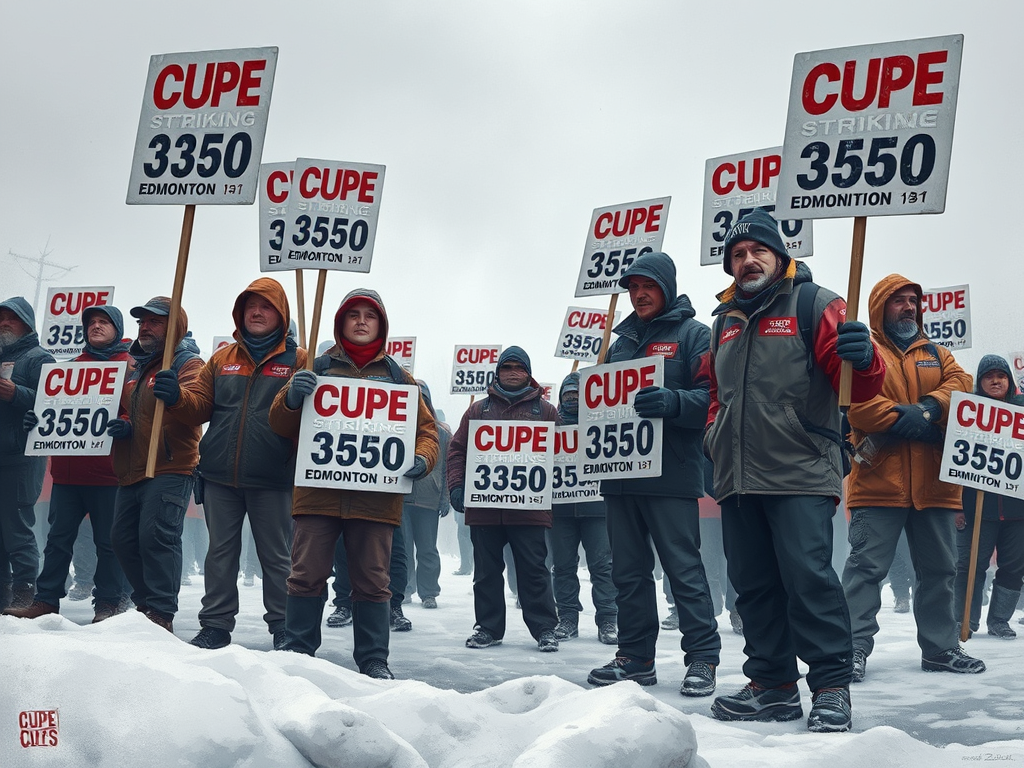
    The absolute worst-case scenario unfolds when negotiations collapse, and a strike is called. I unequivocally condemn strikes as nothing more than economically and socially devastating tactics. They pit worker against worker, creating deep divisions within the membership. Those who dare to cross the picket line, often driven by sheer financial necessity, become targets of vicious smear campaigns and hateful rhetoric. Let’s be realistic: not everyone can survive on meager strike pay. People have bills to pay, families to feed. To demonize those who choose to work to survive is unconscionable. The current CUPE 3550 strike in Edmonton exemplifies this ugly reality. Workers are crossing the line out of desperation, only to be met with scorn and ostracism. The bullying tactics employed by strike proponents are appalling.

    In Conclusion: A Call for Accountability

    I cannot and will not support strikes. I view them as discriminatory and damaging weapons used by unions against their own members. Unions are meant to protect workers’ rights, not strip them away. The current situation demonstrates how easily a union, meant to serve its members, can instead undermine their livelihoods and basic human dignity. It’s time for union leadership to be held accountable for the devastating impact of their actions.

  • Are We Getting Dumber? A Rant on Societal Trends

    Are We Getting Dumber? A Rant on Societal Trends

    Sometimes, it feels like our collective intelligence is declining. Popular culture trends can be baffling, and it’s easy to feel a sense of despair. But is it true? And what’s causing this perception?

    It’s important to remember that intelligence is complex and multifaceted. Defining it solely by IQ tests is problematic, as these tests often overlook various forms of intelligence and can be culturally biased. For instance, why should vision loss preclude someone from taking an IQ test?

    Our current societal climate often seems focused on individual gain rather than collective well-being. We see examples of this in politics, with leaders pursuing agendas that benefit a select few while alienating the majority. The examples of political figures, both international and local, highlight this concern. Such actions can have far-reaching and potentially harmful consequences.

    Looking at younger generations, there are concerns about the influence of slang and evolving social norms. While language naturally changes, some worry about the impact of rapidly evolving trends. Questions arise about the sexualization of children, the power of social pressure, and the treatment of vulnerable populations, such as the homeless.

    It’s easy to feel overwhelmed by these issues and worry about the future. Are we failing our children and ourselves? It’s a valid question, and one that deserves serious consideration. Perhaps instead of simply lamenting the perceived decline of society, we should focus on understanding these trends and working towards positive change.

  • Month Two Begins – The Human Cost of the CUPE 3550 Strike

    Month Two Begins – The Human Cost of the CUPE 3550 Strike

    January 13, 2025, marked the beginning of a difficult period for Edmonton Public Schools students and support staff. Students lost essential services, while staff faced income loss and diminished hope for a fair contract. Since then, reports of weather-related injuries and illnesses among striking workers have become increasingly common, raising serious questions about the strike’s impact.

    The longer this drags on, the greater the hardship. Members are forced to choose between union solidarity and financial survival. The current strike pay of approximately $350 per week—roughly $17.50 an hour for a 4-hour workday—is far below pre-strike wages and unsustainable in today’s economy. While union leadership advocates for a living wage, their actions seem to be pushing members toward poverty.

    The emotional toll is also significant. Daily picketing and phone banking in harsh weather are exhausting. This is compounded by a perceived lack of communication and transparency from the union. Concerns are amplified by events like the recent CUPE national takeover of a Medicine Hat local, which undermined a potential agreement and dismissed the local executive. The use of “rapid response teams” to publicly shame those who cross the picket line further contributes to a climate of fear.

    CUPE 3550 members and school board employees feel trapped. They lack information about bargaining progress and feel their voices are ignored by both the local and national union. Choosing financial stability over meager strike pay results in public shaming, creating a sense of being held hostage.

    Members deserve to know the truth. They deserve to regain their financial independence and their lives. Most importantly, they deserve a chance to vote on the current offer and decide their own future. CUPE 3550 and CUPE National must listen to their members. We are not pawns on a chessboard; we are individuals whose livelihoods and well-being are at stake.

  • The Erosion of Disability Rights: A Personal Reflection

    The Erosion of Disability Rights: A Personal Reflection

    While once it seemed that progress was being made towards acceptance and equality for people with disabilities, recent experiences suggest a troubling reversal. This personal reflection explores this apparent decline, focusing on societal attitudes, education, and employment. These observations are based on my own experiences and may not reflect the experiences of all individuals with disabilities.

    Society

    Technological advancements, such as AI and visual interpretation software, while promising, haven’t translated into true accessibility for many, particularly those with vision loss. While access to information and some products may have improved, crucial areas like point-of-sale systems, self-checkout kiosks, and food ordering systems often remain inaccessible. Negative encounters with service dogs, including outright refusals of service, persist.

    People using mobility devices like wheelchairs and walkers face similar challenges. Accessing buildings and stores is often difficult due to a lack of ramps, automatic doors, and accessible restrooms. Accessible transportation options are becoming increasingly unaffordable and unreliable, with fewer accessible cabs and inconsistent door-to-door transit services. The increasing number of ride-sharing services refusing passengers with service dogs, despite legal protections, further restricts accessibility. Instead of genuine inclusion, society often seems to be pushing people with disabilities further into the shadows, diminishing their autonomy and independence.

    Education

    The ongoing job action by school support staff in Alberta, including administrative assistants, education assistants, and specialized learning support workers, has a devastating impact on students, especially those with disabilities. These students are being denied access to vital educational support, hindering their learning and development. The lack of urgency from the government and school boards to resolve this strike underscores a disregard for the needs of these vulnerable students. The strike also creates a ripple effect, impacting families’ access to respite care. Many students are not receiving the necessary care, education, and independent living skills development they need to thrive. The long-term consequences of this disruption are deeply concerning .

    Employment

    My personal journey in the job market highlights the significant barriers faced by people with disabilities. During my university years (2012-2018), I struggled to find any employment, despite numerous applications. Six summers passed without a single interview. While internships with the Government of Saskatchewan in 2018 and 2019 provided valuable experience, the pandemic disrupted my career. After a period of unemployment, I secured a part-time internship with a non-profit, which ended after two years. Despite working with multiple employment agencies, finding stable employment proved incredibly challenging. My resume and skills were solid, yet employers showed little interest. Over three years, I applied for approximately 2,500 jobs and received only three interviews, ultimately landing my current role. This experience raises serious questions about systemic discrimination and the lack of opportunities for qualified individuals with disabilities.

    Conclusion

    The challenges I’ve described in society, education, and employment raise serious concerns about the true state of disability rights. Are we witnessing a decline in progress, with people with disabilities facing increasing marginalization? Why are human rights legislation and charter rights not being effectively enforced? What concrete steps can be taken to address these issues and ensure genuine equality and inclusion for all? These are urgent questions that demand answers and action.

  • CUPE National – How Do We Trust You?

    Many school support staff in Alberta are preparing for potential or are currently in the midst of strike action. 😟 A recent news report highlights concerning interference by national union executives in the affairs of the local union and its members.  This level of interference is indeed worrying.  #Alberta #Unions #Strike #Education #Labor #Politics

  • Connecting People with the Resources They Need

    Connecting People with the Resources They Need

    I often see individuals struggling with addiction, homelessness, and various mental health challenges, and it’s disheartening to know they may lack the resources and support necessary to thrive. That’s why I’m so passionate about raising awareness of the United Way and their 211 system.

    What is 211?

    For those unfamiliar, 211 is a comprehensive directory of resources available to the public. It’s specifically designed to help people facing social crises, disabilities, and mental health or homelessness concerns. Sadly, many people are unaware of this program, its availability across much of North America, and the various ways to access it. You can call, text, or visit the local 211 website.

    Because 211 is such a vital resource, I’ve added a link to the United Way 211 system to my homepage. If you’re experiencing a social crisis, please don’t hesitate to reach out. The dedicated navigators at 211 are available around the clock to assist you and ensure your safety and well-being.

  • The Impact of the Support Staff Strike on Students with Disabilities

    This analysis focuses on the significant impact of the current support staff strike on students with disabilities, setting aside for the moment the ongoing negotiations between unions and school authorities, regarding support staff wages.

    Impact on Students with Moderate to Severe Disabilities

    Thousands of students are affected by this strike, many of whom are forced to attend school online without adequate support or are unable to attend school at all due to their reliance on educational assistants. This situation directly infringes upon their fundamental right to education, a right they may be too young to fully comprehend. Some students struggle to understand their absence from school and their separation from friends. Others are unable to participate in online learning due to parental work obligations, lack of technology, or their own physical or cognitive limitations. These students are being denied their education as a result of the ongoing dispute between the province and the school board regarding fair wages for support staff.

    Impact on Students Attending School

    Even students with disabilities who are still able to attend school face significant challenges. They often receive substantially less support than usual, relying on overburdened teachers and fellow students for assistance. Some students are struggling without access to essential assistive technologies, alternative format materials, and the necessary support to utilize them effectively. Consequently, these students are not receiving the appropriate education to which they are entitled.

    Impact on Parents

    The strike places immense pressure on parents. Those who must work are caught in a difficult situation, particularly as respite care options are limited and securing respite workers is extremely challenging. Many parents are forced to take leave from work, resulting in lost income. Furthermore, some parents are discovering that funding for disability supports is often restricted to outside of school hours, adding another layer of complexity to their situation.

    The Broader Consequences

    The current situation creates a cascade of negative effects. Parents face potential job insecurity, respite services are overwhelmed, educational assistants are absent from schools, and teachers struggle to meet the diverse needs of their students. The most vulnerable members of the school community—children and youth with disabilities—are disproportionately affected. They may not fully grasp that the strike centers on fair wages for their support staff, but they are the ones who experience the most significant losses.

    The Government’s Role

    The government’s response to this crisis is concerning. While families struggle with the daily realities of the strike, government officials do not appear to be adequately addressing the urgent needs of these students. There is a perceived lack of awareness regarding the profound impact this situation has on the mental health, physical well-being, educational progress, and fundamental right to education for these vulnerable children and youth. This strike effectively communicates to parents of children with disabilities, and the disability community as a whole, that their rights are not being prioritized. This sets a troubling precedent, one that the Alberta government appears to be solidifying.

  • The Hidden Burden of Guide Dog Users: Anxiety

    The Hidden Burden of Guide Dog Users: Anxiety

    While working with a guide dog has drastically improved my mobility and independence, there’s a significant downside that often goes unacknowledged: the constant anxiety surrounding transportation. This is a feeling shared by many guide and service dog users, and for some, it’s a major deterrent to even acquiring or retraining with a dog.

    The Source of the Anxiety

    Have you ever felt anxious booking a cab, rideshare, or even getting into a friend’s car? Many haven’t, but for those of us with guide dogs, this anxiety is a near-constant companion. While hailing a taxi can be somewhat less stressful, the dread associated with rideshares is often overwhelming.

    The root of this anxiety lies in the unfortunate reality that many rideshare drivers don’t believe they’re obligated to transport service or guide dogs and their handlers. They wrongly perceive it as their right to refuse us service. Despite numerous lawsuits against rideshare companies, this discriminatory practice persists, creating a significant barrier for those who rely on these services.

    The Illusion of Legal Protection

    While laws exist to protect our right to access public transportation with our guide dogs, the reality is often far from ideal. These laws, whether at the provincial, state, or national level, frequently lack effective enforcement. In my own jurisdiction, for example, three separate pieces of legislation are designed to protect guide and service dog users. However, two of these are practically unenforceable. Even when legal recourse exists, the process is often so complex and resource-intensive that many victims of discrimination don’t even attempt to pursue it. Police often lack the training or understanding to properly enforce these laws.

    The Bleak Reality

    The result is a disheartening situation. Guide and service dog users are left to constantly fight for their rights, often facing humiliation and feeling like a burden. We’re left stranded, feeling unsafe and apprehensive about what will happen next. This needs to change. People with disabilities shouldn’t be treated as second-class citizens by either our governments or the individuals providing essential public services. Why must we constantly defend rights that are already legally guaranteed? Why must we fight for the enforcement of laws that are already in place? The ignorance and unwillingness to uphold these laws are the real obstacles, and they create a significant and unnecessary burden for those who rely on guide and service dogs for their independence.