Okay Edmonton, some of you seriously got to get back on your meds.
To the Social Justice Worrior on the rout 901 around 3:00 today September 11, Please please please check yourself before you wreck yourself.
Lets unpack what you said:
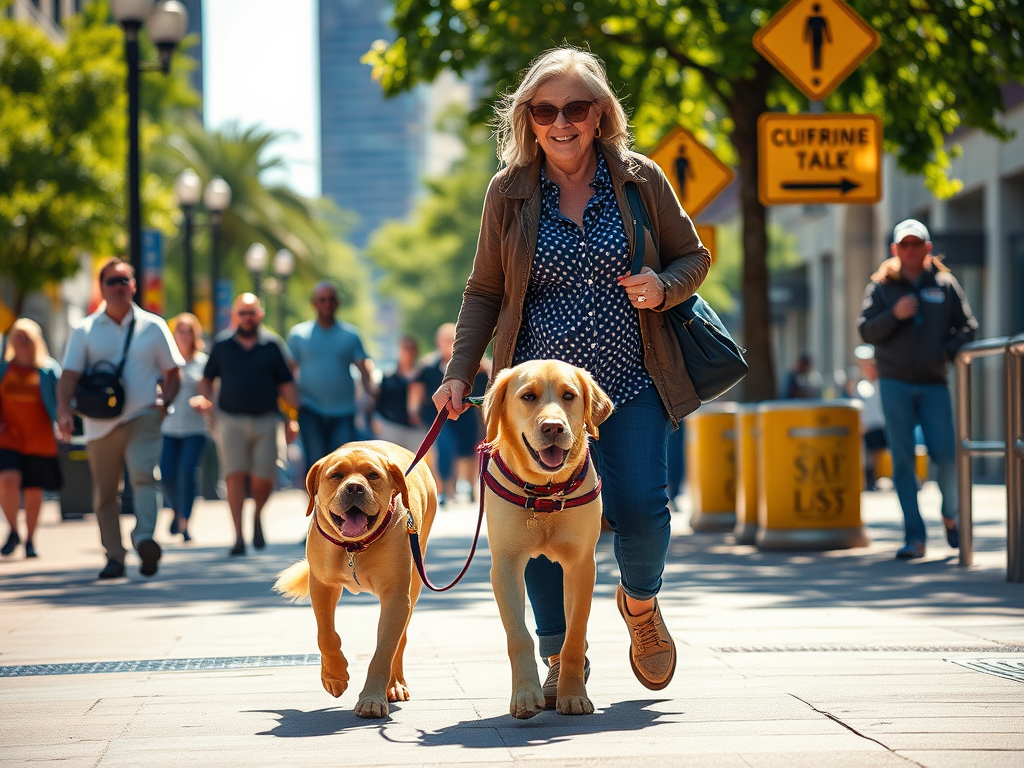
You asked a service dog handler (MY PARTNER) if her service dog was a “SEARCH AND RESCUE DOG” S&R dogs, do not have public access rights, and though they are a task trained dog, they are not generally granted public access. For the record, that adorable yellow girl, the one in full harness and connected by a leash, and more behaved than your pinky finger, yeah she is a Program trained “GUIDE DOG”
You seemed to be bothered by my staring at you like you were / are stupid. BTW, does me not blinking upset you? And yes, you are incredibly stupid.
You telling me to go suck your rubber dick. Sorry, desperation and Gonorrhea don’t particularly taste great, so i will have to pass.
I do have to tell you, you are right, people are claiming their pet dogs as service dogs all to often, and that is in fact illegal; however, there are a vast majority of service dog handlers who know the laws just a little better than you claim, and who in fact are actually working with task trained service dogs. As a random citizen on a bus, you do not have the lawful right to inquire about a dog being a service dog, especially if there are no causes for concern, such as bad behaviour or if the dog looks incredibly stressed by the experience. You, and your actions are actually what is wrong with the demographic of uneducated individuals on the laws around service animals, those who desire to fake their dogs as service dogs etc. Your total lack of understanding of the law around service dogs, guide dogs, and what constitutes as a service or guide dog are absolutely a larger problem than the number of people trying to pass Fluffy off as a service dog. (Sorry Fluffy, if you are a task trained service dog.)
Oh, and your comment about me trying to get in the service dog handlers pants, well the jokes on you since she is kinda already my partner, and has been for over 6 years, soooo… I’ll just leave it at that.
To the two women sitting near my partner and her labradorable, none of that was your fault! You’re awesome!
To you, the crazy bitch who got off at Groat Road and 107th ave, i implore you to seek help, educate yourself on the laws, and learn to back off when you are wrong.
Tag: dog
-
Letter to Edmonton
-
From Cane to Guide Dog 2.0: Lessons Learned About Myself
We all learn about ourselves as we navigate life’s various stages and experiences. This is especially true for those of us with vision loss who use canes, guide dogs, or both. This post reflects my personal journey as a cane user, a guide dog handler, and someone with fluctuating, unreliable residual vision.
Lesson 1: I Over-Rely on My Sight
This was a tough pill to swallow because I didn’t even realize I was doing it. For as long as I can remember, I used my vision to supplement my independent travel, hoping it would catch what my cane missed or identify obstacles at head level. I had no idea how problematic this was until I’d had my first guide dog, Indy, for about a year. We started having serious navigational issues.
Indy, my first little yellow boy, was incredibly smart – almost too smart. The problem? My residual vision was interfering. Instead of guiding me around hazards, he was leading me towards them, walking me right on the edge of sidewalks, and generally making me feel unsafe. I contacted my guide dog program for help. During a session with a trainer, we discovered the root of the problem: I was using my vision, however limited, to override Indy’s trained responses and intelligent disobedience. He was doing his job, but I wasn’t letting him. This resulted in a massive communication breakdown and created dangerous situations.
The takeaway? Just because you have some residual vision doesn’t mean you should use it all the time. Sometimes, the best thing is to trust your dog and let them do what they’re trained to do. Use your vision sparingly, perhaps for identifying visual landmarks to aid in route-finding. With my second guide dog, I’ve noticed a huge difference when I consciously avoid using my vision. He navigates much more smoothly and confidently.
The challenge is becoming aware of when you’re using your vision. It’s often subconscious. Those of us trained in Orientation and Mobility (O&M) who learned to use auditory, visual, and tactile cues together will likely struggle with this the most. It’s okay to have these moments of accidental over-reliance, but the sooner you recognize the pattern, the sooner you can prevent it.
Lesson 2: Trust the Process (and the Dog)
Related to the first lesson, I’ve learned the importance of trusting the process and, more importantly, trusting my dog. It’s easy to second-guess, especially when you’re used to relying on your vision. But a guide dog is trained to make decisions based on a wealth of information – scent, sound, and tactile cues – that we can’t access. When I try to “help” by using my vision, I often introduce conflicting information and confuse my dog. This not only disrupts their focus but can also undermine their confidence.
Learning to let go and trust my dog has been a process. It requires conscious effort and constant self-monitoring. I have to remind myself that my dog is a highly trained professional, and I’m the amateur. The more I trust, the smoother and safer our travels become.
Lesson 3: Communication is Key (Even Without Words)
Effective communication is crucial in any relationship, and the bond between a guide dog and handler is no exception. While we can’t verbally communicate with our dogs, we communicate through subtle cues – leash pressure, body language, and even our emotional state. Learning to read my dog’s cues has been just as important as him learning to read mine. He tells me when he’s unsure, when he’s detected a hazard, and even when he’s just feeling playful. Learning to listen to these nonverbal cues has strengthened our bond and improved our teamwork.
Lesson 4: Patience is a Virtue (Especially with Yourself)
Learning to work with a guide dog is a journey, not a destination. There will be good days and bad days, moments of frustration and moments of pure joy. It’s crucial to be patient – not just with your dog but with yourself. It takes time to build trust, develop effective communication, and learn to navigate the world as a team. There will be setbacks, but it’s important to remember that progress isn’t always linear. Celebrate the small victories, learn from the mistakes, and keep moving forward.
Lesson 5: Adaptability is Essential
Life with a guide dog is full of surprises. Unexpected obstacles, changes in environment, and even the dog’s mood can impact a journey. Being adaptable and flexible is crucial. Sometimes, you have to change your route, slow down, or even take a break. Learning to roll with the punches and adjust to changing circumstances has made me a more resilient and resourceful traveler.
Conclusion
My journey from cane to guide dog (and now guide dog 2.0) has been a profound learning experience. It’s taught me about self-awareness, trust, communication, patience, and adaptability. These lessons extend far beyond navigating the physical world; they’ve enriched my life in countless ways. While there have been challenges, the rewards of working with a guide dog are immeasurable. The independence, companionship, and unconditional love they offer are truly life-changing.