Tag: Equity

  • Systematic discrimination canadian airlines and service dogs

    Systematic discrimination canadian airlines and service dogs


    DATE: April 15, 2026
    ATTN:


    Hon. Steven MacKinnon | steven.mackinnon@parl.gc.ca
    CC:
    Hon. Kelly Mccauley | kelly.mccauley@parl.gc.ca
    Hon. Mark Carney | mark.carney@parl.gc.ca

    RE: Systematic Discrimination Against Persons with Disabilities in Canadian Air Travel


    Dear Minister MacKinnon,
    It is with a profound sense of urgency and frustration that I write to you regarding the current state of air travel in Canada. For many Canadians, air travel is an essential service—required for maintaining family connections, accessing specialized medical care in other provinces, or participating in the national economy. However, for those of us living with disabilities, the experience of air travel is increasingly defined by systemic barriers and discriminatory practices.


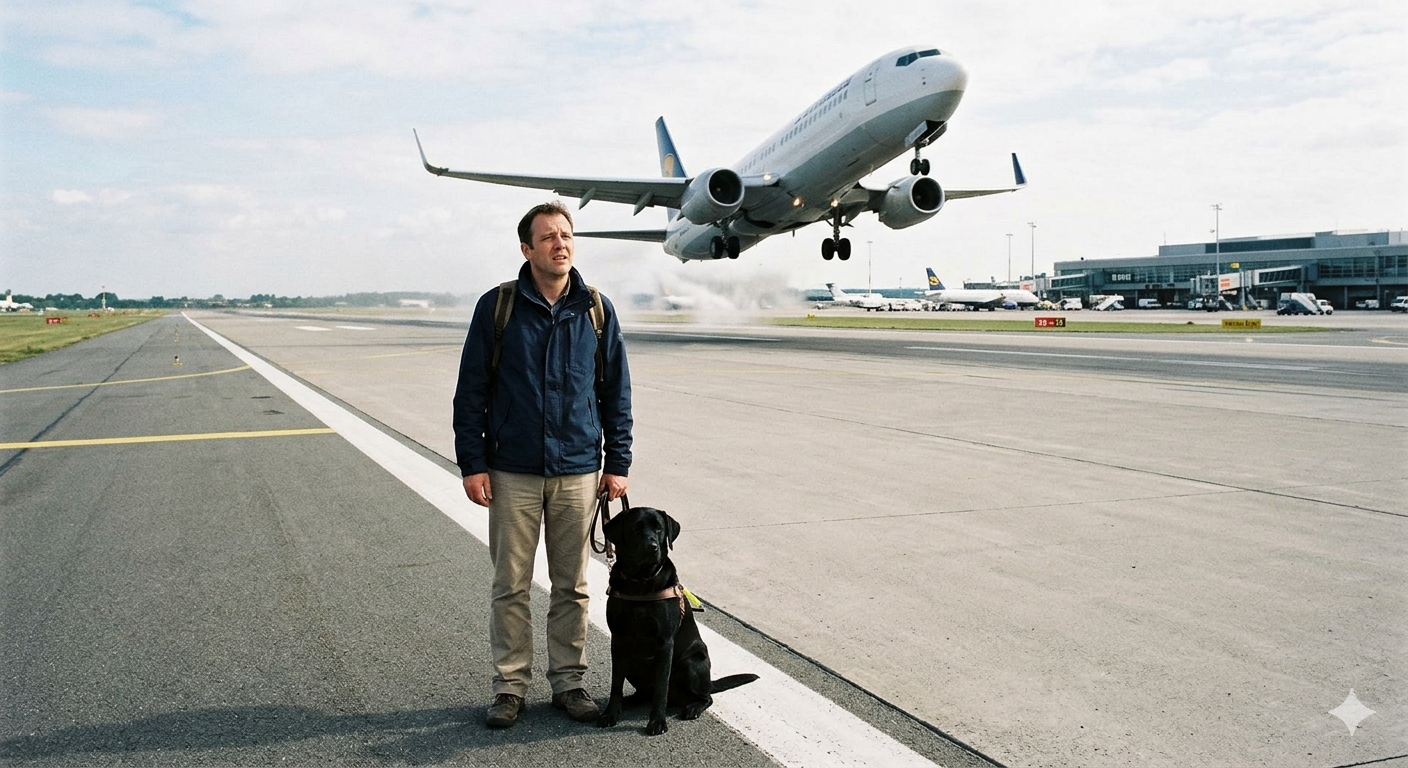
    While recent public discourse has rightly focused on the unacceptable frequency of damaged medical equipment and mobility aids, there is a quieter, equally damaging form of discrimination occurring: the treatment of service and guide dog handlers by our national airlines. My recent and ongoing experiences with two of our major national carriers demonstrate that these are not isolated incidents, but rather a reflection of a flawed regulatory environment.
    It has become clear that in Canada, we have effectively created three distinct “classes” of citizenship regarding transportation:
    Able-bodied citizens: Who enjoy seamless, autonomous travel.


    Persons with disabilities who do not utilize service animals: Who face physical barriers but maintain some level of digital autonomy.
    Persons with disabilities who work with service or guide dogs: Who are subjected to invasive, inconsistent, and degrading bureaucratic hurdles simply for choosing a mobility aid that is biological rather than mechanical.


    Our national airlines have made travel for service dog handlers burdensome and emotionally exhausting. By imposing restrictive internal policies, they have effectively bypassed our rights to independence, autonomy, and dignity as protected under the Canadian Charter of Rights and Freedoms.


    To illustrate this disparity, I ask you to consider the following three scenarios:
    The Able-Bodied Traveler: Books a flight three months in advance. They receive a digital notification 24 hours prior, check in via their smartphone, receive an electronic boarding pass, and proceed through security to their gate with zero friction.


    The Traveler with a Disability (No Service Animal): Generally experiences the same digital autonomy as the able-bodied traveler, assuming no specialized physical assistance is required at the check-in counter.
    The Traveler with a Service or Guide Dog: Upon booking months in advance, they are mandated by airline policy to “apply” for travel at least 48 hours before departure. They must submit the dog’s height, weight, length, and girth, and provide “proof of task” or identification—documentation that is not even legally required or provided in every jurisdiction.


    The most egregious barrier, however, is the refusal to issue electronic boarding passes to service dog handlers. For those of us with vision loss, digital documents are a cornerstone of our independence. We use screen readers and adaptive technology to access information that sighted travelers take for granted. By forcing us to wait in line for a paper pass, the airlines are not only stripping us of our time but also our autonomy. We are then subjected to an “assessment” at the airport by airline staff who often lack the specialized training required to evaluate a professional service animal. We are not told who is assessing us or what criteria are being used, creating an environment of constant anxiety where our right to travel can be revoked on a
    I am exhausted, Minister MacKinnon. I am exhausted by the constant need to advocate simply to exist and move within my own country. It is dehumanizing to be told, through policy and practice, that my life and my travel are “less than” because my mobility aid has a heartbeat.
    We require immediate action and meaningful consultation. This consultation must involve disabled individuals directly, rather than relying solely on large organizations that may not represent the lived realities of independent handlers.
    Why is it that I can fill out a Department of Justice attestation form for the United States and travel with dignity, yet in Canada, I must plead for my rights every time I enter an airport? I urge your office to review the Accessible Transportation for Persons with Disabilities Regulations (ATPDR) and hold our national carriers accountable for these discriminatory practices.
    I look forward to your response and to hearing how your ministry intends to restore equality to the Canadian skies.
    Respectfully,
    Douglas Rudolph

  • Rideshare Affordability: Highway Robbery or Necessary Evil?

    Rideshare Affordability: Highway Robbery or Necessary Evil?

    Let’s talk about the financial accessibility of rideshare services, specifically how cold weather and surge pricing can make them feel like a highway robbery. My partner and I recently experienced this firsthand, and it got me thinking about how these pricing models impact people, especially those on fixed or limited incomes. I want to explore two scenarios: cold weather and surge pricing, both of which present unique challenges.

    Cold Weather: Frozen Out of Options (and Funds)

    Picture this: You drag yourself out of bed, peek at the weather, and it’s -30°C before windchill – that’s roughly -40°C with it. Way too cold to walk, even if your destination is just a few blocks away. So, you check Lyft. Imagine the frustration when you see that a short trip for two people will cost around $25. That’s about $15 more than usual, and also about $15 more than pre-booking a ride with a traditional taxi service.

    Let’s unpack this. Extreme cold isn’t just uncomfortable; it’s a safety hazard. Walking in those temperatures can lead to frostbite, hypothermia, and other serious health risks. For people without other transportation options, a rideshare becomes a necessity, not a luxury. But when prices skyrocket due to demand, those who need the service most might be priced out of it. This creates a difficult situation: risk your health by walking, or break the bank for a ride? It shouldn’t be an either/or situation.

    Think about the implications for essential workers who start early or finish late, when public transit might be limited or nonexistent. Or consider elderly individuals or people with disabilities who may be particularly vulnerable to the cold. A sudden cold snap can turn a normally affordable commute into a significant financial burden. This raises the question: should rideshare services have a responsibility to provide accessible transportation during extreme weather events, or is it simply a matter of supply and demand? Perhaps a capped cold-weather surcharge, or partnerships with local organizations to subsidize rides for vulnerable populations, could be a solution.

    Surge Pricing: The Mystery of the Multiplying Fare

    Traditional taxi services sometimes have surcharges, but rideshare surge pricing seems to operate on a whole different level. Need a ride during rush hour, or to/from a busy area? Prepare to pay a premium. The problem is the lack of transparency. I’ve never been able to find a clear explanation of how surge pricing is calculated or when it’s activated. It feels arbitrary, and sometimes, even exploitative.

    Let’s dive deeper into the complexities of surge pricing. While it’s often justified as a way to incentivize drivers to work during peak demand, the lack of predictability can be incredibly frustrating for riders. Imagine budgeting for a trip, only to find the price has doubled or tripled by the time you’re ready to book. This makes it difficult to plan and can lead to unexpected financial strain.

    Furthermore, the algorithms that determine surge pricing can be opaque. Are they truly responding to real-time supply and demand, or are other factors at play? There have been concerns about algorithms potentially targeting specific demographics or areas, leading to price discrimination. Without more transparency, it’s hard to trust that surge pricing is always fair.

    What if rideshare companies were required to provide clear and upfront information about surge pricing, including the factors that trigger it and how it’s calculated? Perhaps a cap on surge multipliers, or a system that allows riders to see how prices have fluctuated over time, could give them more control over their spending.

    The Bigger Picture: Accessibility and Equity

    Ultimately, the issue comes down to accessibility and equity. When fees, extra charges, and price hikes make a service unaffordable, it becomes less accessible to those who may need it most. When pricing models aren’t transparent, these extra charges can feel like a form of price gouging. This raises fundamental questions about who these services are for. If they become unaffordable when vulnerable people need them most, are they truly serving the community?

    If affordable transportation options aren’t available, people may be left with no choice but to brave the elements, potentially putting their health at risk. Or they may be forced to forgo essential trips, impacting their ability to work, access healthcare, or participate in social activities. This can have far-reaching consequences, exacerbating existing inequalities.

    So, do surge pricing and cold-weather surcharges have a place in the rideshare ecosystem? Perhaps, but they need to be implemented in a way that is fair, transparent, and doesn’t disproportionately burden vulnerable populations. We need a broader conversation about how to ensure that transportation services are truly accessible to everyone, regardless of income or circumstance.