Contrast
Text

Tag: guide dog

  • The Erosion of Disability Rights: A Personal Reflection

    The Erosion of Disability Rights: A Personal Reflection

    While once it seemed that progress was being made towards acceptance and equality for people with disabilities, recent experiences suggest a troubling reversal. This personal reflection explores this apparent decline, focusing on societal attitudes, education, and employment. These observations are based on my own experiences and may not reflect the experiences of all individuals with disabilities.

    Society

    Technological advancements, such as AI and visual interpretation software, while promising, haven’t translated into true accessibility for many, particularly those with vision loss. While access to information and some products may have improved, crucial areas like point-of-sale systems, self-checkout kiosks, and food ordering systems often remain inaccessible. Negative encounters with service dogs, including outright refusals of service, persist.

    People using mobility devices like wheelchairs and walkers face similar challenges. Accessing buildings and stores is often difficult due to a lack of ramps, automatic doors, and accessible restrooms. Accessible transportation options are becoming increasingly unaffordable and unreliable, with fewer accessible cabs and inconsistent door-to-door transit services. The increasing number of ride-sharing services refusing passengers with service dogs, despite legal protections, further restricts accessibility. Instead of genuine inclusion, society often seems to be pushing people with disabilities further into the shadows, diminishing their autonomy and independence.

    Education

    The ongoing job action by school support staff in Alberta, including administrative assistants, education assistants, and specialized learning support workers, has a devastating impact on students, especially those with disabilities. These students are being denied access to vital educational support, hindering their learning and development. The lack of urgency from the government and school boards to resolve this strike underscores a disregard for the needs of these vulnerable students. The strike also creates a ripple effect, impacting families’ access to respite care. Many students are not receiving the necessary care, education, and independent living skills development they need to thrive. The long-term consequences of this disruption are deeply concerning .

    Employment

    My personal journey in the job market highlights the significant barriers faced by people with disabilities. During my university years (2012-2018), I struggled to find any employment, despite numerous applications. Six summers passed without a single interview. While internships with the Government of Saskatchewan in 2018 and 2019 provided valuable experience, the pandemic disrupted my career. After a period of unemployment, I secured a part-time internship with a non-profit, which ended after two years. Despite working with multiple employment agencies, finding stable employment proved incredibly challenging. My resume and skills were solid, yet employers showed little interest. Over three years, I applied for approximately 2,500 jobs and received only three interviews, ultimately landing my current role. This experience raises serious questions about systemic discrimination and the lack of opportunities for qualified individuals with disabilities.

    Conclusion

    The challenges I’ve described in society, education, and employment raise serious concerns about the true state of disability rights. Are we witnessing a decline in progress, with people with disabilities facing increasing marginalization? Why are human rights legislation and charter rights not being effectively enforced? What concrete steps can be taken to address these issues and ensure genuine equality and inclusion for all? These are urgent questions that demand answers and action.

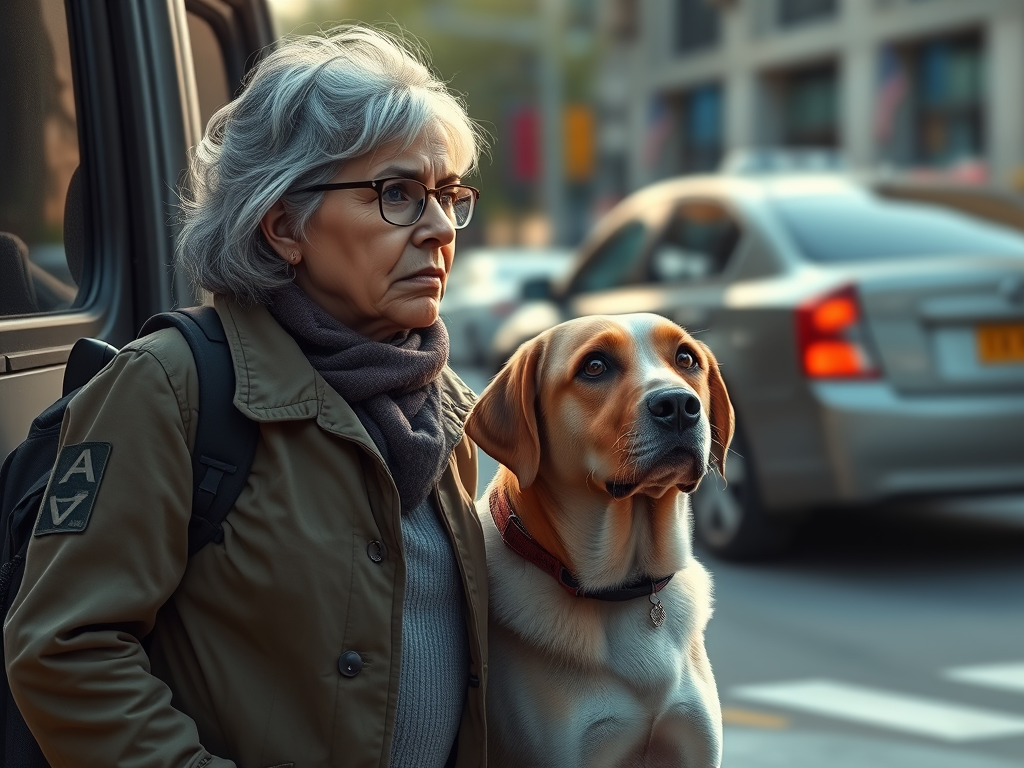
  • Woof woof, hey fur-friends and humans! It’s Crew here, your favorite fluffy yellow guide dog!

    Woof woof, hey fur-friends and humans! It’s Crew here, your favorite fluffy yellow guide dog!

    Dad says he’s been yappin’ with people about why I sometimes gotta stay home when it’s really chilly. Like, bone-chilling, nose-freezing, -30C (that’s -22F for my awesome American pals!) cold. So, lemme give you the scoop from a dog’s-eye view.

    Boots? More Like BOO-ts!

    Okay, seriously, am I the only doggo who HATES boots? I gotta feel the ground beneath my paws! Is that too much to ask? Dad says when it’s this cold, my precious paw-pads need protection so they don’t turn into ice cubes. I do kinda like those balloon boots, ya know, the rubbery ones. They’re fun to chew on… I mean, walk in. But Dad says even with baby socks (which are surprisingly comfy), they’re not enough for the super-cold days. Rats!

    Crew’s Day Off (Kinda)

    So, if I can’t wear my super-duper-warm boots (which I don’t have ’cause I hate ’em), and it’s colder than a polar bear’s toenails, guess what? It’s Crew’s day off! Woo hoo! I get to chillax at home, snuggling with my kitty pals and my big sis (she’s the best!). It’s paw-some! But, and this is a BIG but, it’s also kinda boring. I miss all the action! Dad says he’s on something called a “strike” right now. I don’t get it. I just wanna go to the school and see my human friends! I miss my people! Plus, everyone’s all stressed out about stuff. So, I guess a day off helps my little yellow brain decompress.

    A Paw-some Lesson for My Furry Friends

    Listen up, pups! If your human says you gotta stay home, they’re probably just lookin’ out for your fluffy little self. Sometimes, if you’re lucky, they just wanna give you a break (which is the best!). But on cold days, it’s ’cause they love your little toe beans and don’t want ’em to freeze. And if you’re like me and you’re not a boot fan, make sure your human knows! They want your paws to be happy and warm!

    Okay, that’s all from me for now. Gotta go nap. Crew out! Woof!

  • The Hidden Burden of Guide Dog Users: Anxiety

    The Hidden Burden of Guide Dog Users: Anxiety

    While working with a guide dog has drastically improved my mobility and independence, there’s a significant downside that often goes unacknowledged: the constant anxiety surrounding transportation. This is a feeling shared by many guide and service dog users, and for some, it’s a major deterrent to even acquiring or retraining with a dog.

    The Source of the Anxiety

    Have you ever felt anxious booking a cab, rideshare, or even getting into a friend’s car? Many haven’t, but for those of us with guide dogs, this anxiety is a near-constant companion. While hailing a taxi can be somewhat less stressful, the dread associated with rideshares is often overwhelming.

    The root of this anxiety lies in the unfortunate reality that many rideshare drivers don’t believe they’re obligated to transport service or guide dogs and their handlers. They wrongly perceive it as their right to refuse us service. Despite numerous lawsuits against rideshare companies, this discriminatory practice persists, creating a significant barrier for those who rely on these services.

    The Illusion of Legal Protection

    While laws exist to protect our right to access public transportation with our guide dogs, the reality is often far from ideal. These laws, whether at the provincial, state, or national level, frequently lack effective enforcement. In my own jurisdiction, for example, three separate pieces of legislation are designed to protect guide and service dog users. However, two of these are practically unenforceable. Even when legal recourse exists, the process is often so complex and resource-intensive that many victims of discrimination don’t even attempt to pursue it. Police often lack the training or understanding to properly enforce these laws.

    The Bleak Reality

    The result is a disheartening situation. Guide and service dog users are left to constantly fight for their rights, often facing humiliation and feeling like a burden. We’re left stranded, feeling unsafe and apprehensive about what will happen next. This needs to change. People with disabilities shouldn’t be treated as second-class citizens by either our governments or the individuals providing essential public services. Why must we constantly defend rights that are already legally guaranteed? Why must we fight for the enforcement of laws that are already in place? The ignorance and unwillingness to uphold these laws are the real obstacles, and they create a significant and unnecessary burden for those who rely on guide and service dogs for their independence.

  • Why I Chose a Guide Dog: My Journey from Cane to Canine

    For those who are visually impaired, the question of mobility tools is a deeply personal one. Choosing between a white cane and a guide dog is a significant decision, and one I didn’t take lightly. I’ve been asked why I ultimately chose to train and work with a guide dog, and I wanted to share my reasons. It’s important to remember that my experience is unique to me, and what works for one person might not work for another. Thorough research and introspection are key to making the right choice for your own needs.

    The Cane Conundrum

    Before I had my first guide dog, I used a white cane, on and off. Living in a small town, it served its purpose well enough. However, moving to the city exposed its limitations. Suddenly, I was constantly bumping into things, jabbing myself in the stomach (ouch!), and replacing canes at an alarming rate thanks to people tripping over them. It was during this time that I was also considering furthering my education. The combination of increased collisions, painful jabs, and damaged canes, especially with the added stress of school, pushed me to explore other options. In the spring of 2011, I applied for my first guide dog.

    A World Transformed

    Training with my first guide dog was a revelation. It opened my eyes to just how much I hadn’t been noticing in my environment. So much information, so much unnecessary stress, simply melted away. Suddenly, getting from point A to point B was faster, more efficient, and significantly less challenging. The true impact of this change became even clearer when I retired my first dog. Navigating my own neighborhood with just a cane again was incredibly exhausting. I was shocked by how much energy it took, and how much freer I had felt with my dog. It’s hard to believe, but the four years I spent without a guide dog were, in fact, the most exhausting four years of my life.

    My Verdict: Freedom Over Fatigue

    So, where do I stand on the cane versus canine debate? For me, a guide dog is the clear winner. I choose the freedom of movement and the reduced mental burden that comes with it over the constant exhaustion and limitations I experienced with a cane. I’ll take the open road and the confidence a guide dog provides any day.

  • Where Is Your Dog

    “Where’s Your Dog?” & Other Questions I’m Tired of Answering

    You know that question. The one that seems to tumble out of people’s mouths whenever they see a blind person: “Where’s your dog?”

    It’s a question that often comes with an undercurrent of surprise, even pity. People seem to assume that every blind person must have a guide dog.

    But the truth is, it’s not that simple.

    Here are a few reasons why I might not have my guide dog with me:

    1. Injury:

    Let’s be honest, accidents happen. If I’ve injured my arm, leg, or shoulder, working with my dog can be dangerous for both of us. A recent cortisone shot in my Achilles tendon left me with a significant limp, making it difficult to maintain balance while guiding my dog.

    2. Weather Extremes:

    Extreme weather conditions can be challenging for both humans and dogs. I’ve set personal limits: below -25°C, my dog gets to decide if he wants to brave the cold. At -30°C or colder, he stays home. Similarly, in the summer, I let him decide above 25°C and keep him home above 30°C.

    3. Illness:

    Just like us, dogs get sick! If my dog is experiencing vomiting or diarrhea, he needs a day to rest and recover.

    4. Not Everyone Has a Guide Dog:

    This is a big one!

    • Choice: Many blind people choose not to work with a guide dog.
    • Circumstances: Guide dog training is a significant commitment. It may not be feasible for everyone due to financial limitations, living situations, or personal preferences.
    • Independence: Some blind people prefer to navigate independently using other assistive devices like canes or long canes.

    Please, Respect Our Choices

    It’s important to remember that blindness is a diverse experience. Each person navigates the world differently.

    Ultimately, it’s about respecting our independence and our right to choose how we live our lives.

    Disclaimer: This blog post reflects the author’s personal experiences and opinions.

    I hope this helps! Let me know if you have any other questions.