Contrast
Text

Tag: Lyft

  • A Letter to Rideshare and Taxi Drivers

    A Letter to Rideshare and Taxi Drivers

    Hey, it’s me—the person you just refused service to.

    I’m taking a moment of my time to let you know the real impact of your actions. It’s more than just a missed ride; what you just did ripples through my day, my mental health, and my confidence.

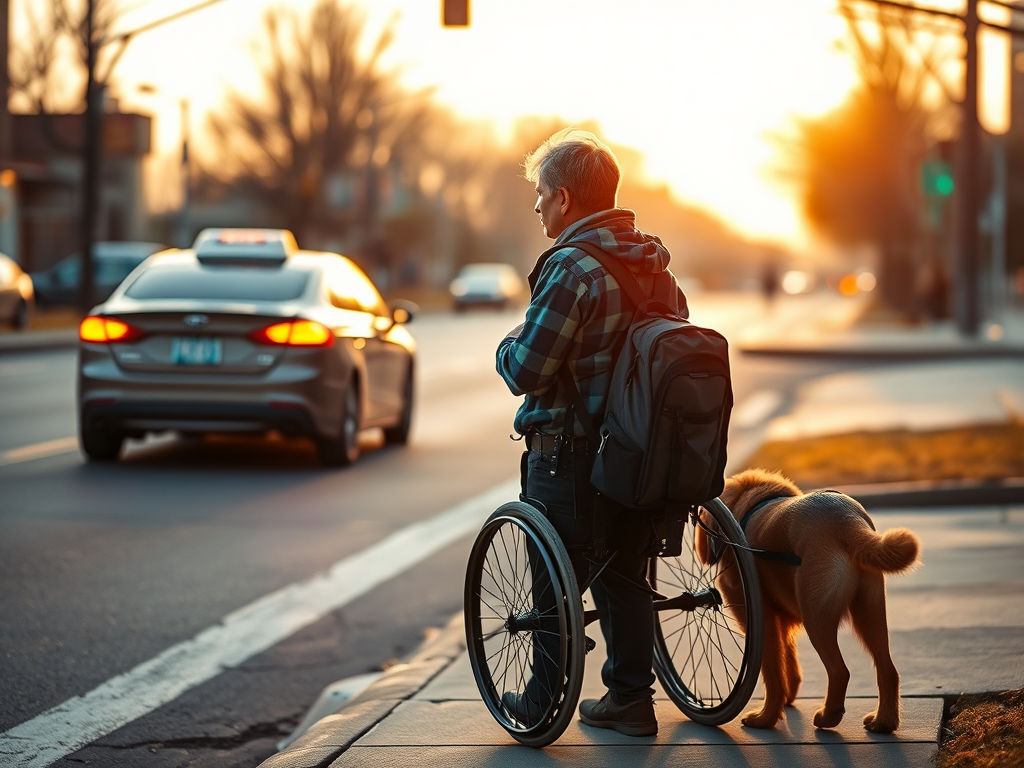
    You pulled up in front of my house, my workplace, my doctor’s office, or the mall, and upon seeing a dog, you decided I wasn’t worth your time or the fare. You told me you don’t transport pets, that you have allergies, or that because you have kids, you won’t allow us in your car. It didn’t matter how many times I explained that this is a service animal, or that your refusal is illegal; you decided to simply drive away. You chose to abandon me on a curb or in a dark parking lot. You made a conscious decision to break the law, and yet I—the person with a disability—am the one who pays the price for your choice.

    The Law is Not a Suggestion

    You may be wondering exactly how you broke the law. Ignorance is not an acceptable excuse. In most jurisdictions, a service dog has the same rights and protections as a human being. Here in Alberta, we are protected by three distinct pieces of legislation:

    1. The Alberta Human Rights Act
    2. The Service Dogs Act
    3. The Blind Persons’ Rights Act

    Each of these carries its own penalties. Specifically, the Service Dogs Act and the Blind Persons’ Rights Act can impose fines of up to $3,000. Additionally, the City of Edmonton can hand out fines of $1,000 for such violations. These animals are heavily protected by law, yet you treated me like an inconvenience.

    This doesn’t even account for the policies you’ve violated with Uber, Lyft, or your taxi company. Unfortunately, these penalties aren’t enforced often enough, and some of you treat a fine as nothing more than a “speed bump” or a cost of doing business.

    A Note of Gratitude: I want to acknowledge that many of you are amazing people. Most drivers understand the role of a service dog and are even interested in learning more. I truly appreciate those of you who treat us with respect.

    The True Cost of Your Refusal

    When you sped off, you nearly hit my dog because you weren’t concerned with the well-being of a living, breathing being. Now, I have to rebook. Sometimes that means paying a surge price because you canceled the trip after leaving.

    Because of your discrimination, I am now late for work, a medical appointment, or a much-needed lunch with family. I now have to spend 30 minutes filing a report with the rideshare company, and potentially up to two hours on the phone with the municipality to file a formal complaint. If you choose to plead innocent—which is your right—I then have to take time off work to appear in court. All of this for a 20-minute, $15 ride.

    The Psychological Impact

    Beyond the logistics, consider the mental toll. You made me question my value. You stripped away my independence because, without a reliable ride, I may not be able to access my community. You reinforced the painful idea that people with disabilities don’t belong in public spaces.

    Your refusal was more than a “no”; it was overt discrimination. It made me feel less than human and less deserving of equity. It added another layer of trauma to an already difficult life.

    Even my dog feels it. When you traumatize me, my dog becomes stressed and may become distracted from the life-saving tasks they are trained to perform. When you sped away and nearly hit them, you put a highly-trained medical asset—and a living creature—in physical danger.

    Understanding the Service Dog

    I cannot stay quiet, but I am exhausted from reporting incidents that seem to have no impact. What will it take for you to recognize us as people? These dogs are here to keep us safe. They are no different than a person’s cane, a pair of crutches, or an oxygen tank. They are living, breathing medical equipment. If you wouldn’t refuse a passenger with a wheelchair, why would you refuse a service dog?

    Regarding the “allergy” excuse: Let me be direct. In the City of Edmonton, unless you have a physician-documented allergy on file with the Vehicle for Hire team, you are legally obligated to transport us. If you do have a legitimate medical exemption, the professional thing to do is to wait with me until the next driver arrives to ensure I am not left stranded.

    A Plea for Dignity

    You would be rightfully upset if a passenger discriminated against you. All I ask is that you extend me the same courtesy. Treat me with respect and dignity, and I promise to do the same.

    It is not my fault I live with a disability, but it is these four paws that help me navigate the world safely. These paws keep me aware of my health and find help if I lose consciousness. They make it possible for me to participate in society.

    I still bleed, my heart still beats, and I still feel the sting of being rejected. The next time you see a service dog and think about driving away, I want you to think about the human being you are leaving behind.

    Sincerely,

    Service Dog Handlers across Alberta, British Columbia, Manitoba, New Brunswick, Newfoundland and Labrador, Nova Scotia, Ontario, Prince Edward Island, Quebec, Saskatchewan, and the Territories.

  • Crew Talks Service Dogs & Uber / LYft

    Crew Talks Service Dogs & Uber / LYft

    Hi Guys! It’s your very fluffy boy, CREW!

    I’m off duty today, and I really needed to talk to you all about something super important that happens right here at home. My mom has been quite upset lately because of all the Uber and Lyft drivers in Edmonton who refuse to transport her and my sister. And honestly, I totally get why she’s upset, because the same thing happens to my dad and me on a disappointingly regular basis. It’s frustrating for my whole family!

    So, let’s have a real chat and truly understand the problem.

    I’m Not a Pet, I’m a Professional!

    I’m not wearing it right now (gotta air out the fluff!), but I am a very proud professional. I am what you call a guide dog. I usually wear a special harness, which you’ll see later. My job is to guide my dad around all the obstacles, tell him where steps and curbs are, and make sure he doesn’t walk into anything. I take my job very… well… mostly seriously.

    Sometimes Dad is running late, or it’s dangerously cold, or it’s just easier to take a ride, so he books a Lyft or Uber. He tells me his paws get anxious every time because drivers constantly try to refuse us.

    Dad says that in Alberta, it is illegal to refuse access to a service dog or guide dog. He’s also told me that right here in the City of Edmonton, it’s against the Vehicle for Hire Bylaw. I don’t fully understand all the legalese, but I understand that refusing us is wrong, and there are serious consequences. I’ve also heard him and Mom talking about how it’s strictly against Uber and Lyft policies to refuse access to any of us service dogs.Allergies & Fears: Let’s Get Real

    Allergies

    Now, I understand that some of you might be allergic to dogs. I totally get that. (Though, I’m slightly offended you’re scared of me—I mean, look at this fluff!) In all seriousness, if you are truly allergic, I can only tell you what the City of Edmonton requires: proof.

    You must provide the City of Edmonton’s Vehicle for Hire team with a valid, documented doctor’s note stating your allergy. If you have this documentation, here is the proper protocol:

    1. Upon arrival, if you see me or a dog like me, please immediately let my dad (or the other handler) know that you have a documented allergy.
    2. Put us back in the system to be dispatched to a different vehicle.
    3. Please stay with us until the other vehicle arrives. This ensures our safety and ensures that you do not face any repercussions for a refusal that is legally allowed only with proper documentation.

    Fears

    Your fear is valid; don’t let anyone tell you it’s not. I hear you, I respect you. But your fear of me is not a legal ground for refusing me service. I know you probably don’t know about all the intense training I’ve had, so let me tell you about what it takes to be this level of professional.

    My Resume: The Making of a Guide Dog

    I’m a guide dog, which means my journey started at the kennels of the amazing program that trained me (shout out to Guiding Eyes For The Blind!). After about two to three months, I went to my foster home. They made sure I was fully housebroken and went through rigorous obedience training. When you’re a service dog, there is no room for aggression.

    I then had to pass a really tough exam called the Public Access Test (some places call it Canine Good Citizen Testing). Passing this means I have proven I behave in a manner that is acceptable to access public spaces where regular pets are not allowed. At this point, I officially became a service dog.

    • Quick Fact: “Service dog” is the general term for any of us who are trained to perform a specific task to help a person with a disability. All guide dogs are service dogs, but not all service dogs are guide dogs. Once I’m a service dog and no longer a pet, it becomes even more illegal to refuse me!

    How to Tell If We Are Legit

    Now, I know you’re asking, “What do I do if I can’t tell if it’s a service dog, or if I suspect the handler is fibbing?” You’ll be happy to know that:

    1. It is illegal to claim you are disabled when you are not.
    2. You are only permitted to ask two specific questions to verify a service dog team.

    Question 1: Is that a service dog?

    If they answer yes, and you are still unsure, you can ask the next question.

    Question 2: What task is the dog trained to perform? (or “What task does the dog perform to assist you with your disability?” or “How does your dog assist you?”)

    These questions are all essentially the same and allow for your own wording. These are the only questions you are legally permitted to ask. This rule is pretty much North America-wide.

    If you drive in Canada, some provinces require service dogs to have ID cards, and you can ask for this proof. Just remember that not every team has these ID cards, as they may not be a resident of that specific province.

    My Final Plea to Drivers

    To every Uber, Lyft, and Taxi driver: All I ask is that you please do not call or consider me a pet.

    I am a service dog, and I have protected rights. I am permitted to go anywhere the general public is permitted. If you are driving your own car but providing a public service like rideshare, I am permitted to travel with my dad unless you have that documented allergy.

    I implore you: please take the mandatory training from the City of Edmonton and really read the Uber and Lyft policies. This will help you avoid being ticketed or having to go to court. This is a very real thing, and Dad and I have already had to go to court multiple times because of ride refusals.

    Nobody wants to go to court! It means a loss of money for everyone, and it could negatively impact your ability to drive.

    I know most of you are wonderful people, but for the few who want to refuse me, please don’t. I am a service dog; I am the equal of a person’s walker, crutches, cane, or oxygen tank. If you would not refuse a set of crutches, you cannot refuse me, either.

    Love,

    CREW (The Fluffiest Professional)

  • Service Dog Ride Refusal: A Frustrating Reality

    Service Dog Ride Refusal: A Frustrating Reality

    Many people are aware of the high rate of ride refusals experienced by service dog handlers using ride-sharing services like Uber and Lyft. I recently experienced this firsthand, and I want to share my story to illustrate the impact these refusals have. This incident occurred on January 31, 2025, in Edmonton, Alberta, where the temperature was a frigid -20C with blowing snow.

    I was leaving my union office, where I’ve been working temporarily during a school board support staff strike. Given the harsh weather and poor sidewalk conditions, I decided to book a ride instead of walking. Unfortunately, what should have been a simple ride home turned into a frustrating and disheartening experience.

    I was initially matched with a driver named Fateh. Upon arrival, he refused to transport me and my guide dog, claiming a “no dogs allowed” policy. He then proceeded to spread misinformation about Lyft’s policies, his supposed lack of English proficiency, and other excuses. When I attempted to show him my service dog identification card, which clearly outlines his legal obligations under provincial law, he drove away.

    The Impact of Refusal

    This refusal had a ripple effect. My guide dog sensed my distress, experiencing the same negative emotions without understanding or being able to alleviate the situation. The dog was also exposed to the increasingly cold and uncomfortable weather. Passersby witnessed the incident with visible confusion and a sense of helplessness.

    Personally, I experienced a range of emotions. Initially, I felt irritation at having to constantly defend my legal rights. This quickly escalated to anger—anger at the repeated refusals, the powerlessness to prevent them, and the fact that I was now stranded due to someone’s ignorance. Finally, I felt a sense of utter frustration and despair. What’s the point of fighting for change, I wondered? What’s the point of having legal protections if they aren’t enforced?

    The Aftermath

    This experience ruined the start of my weekend. It left me feeling psychologically drained, frustrated, and demoralized. Beyond filing complaints with Lyft (and receiving a paltry $10 credit for the inconvenience), I now face the added burden of filing a complaint with 311 for bylaw enforcement, a process that could involve a lengthy investigation and even a court appearance.

    The larger question remains: what will it take to create real change? What needs to happen for these companies and their drivers to respect the law and the rights of service dog handlers? I’m exhausted, frustrated, and frankly, sick of this constant struggle.